
 3S
3S


LSE Summer School Experience 2025
School of Liberal Arts and Sciences of Economics and Business Administration (EM), PDP 9th batch (enrolling April 2023)
Graduated from Kanagawa Prefectural Sagamihara High School
■Studying at: London School of Economics and political science
■Study period (local stay period): June to July 2025
Graduated from Kanagawa Prefectural Sagamihara High School
■Studying at: London School of Economics and political science
■Study period (local stay period): June to July 2025
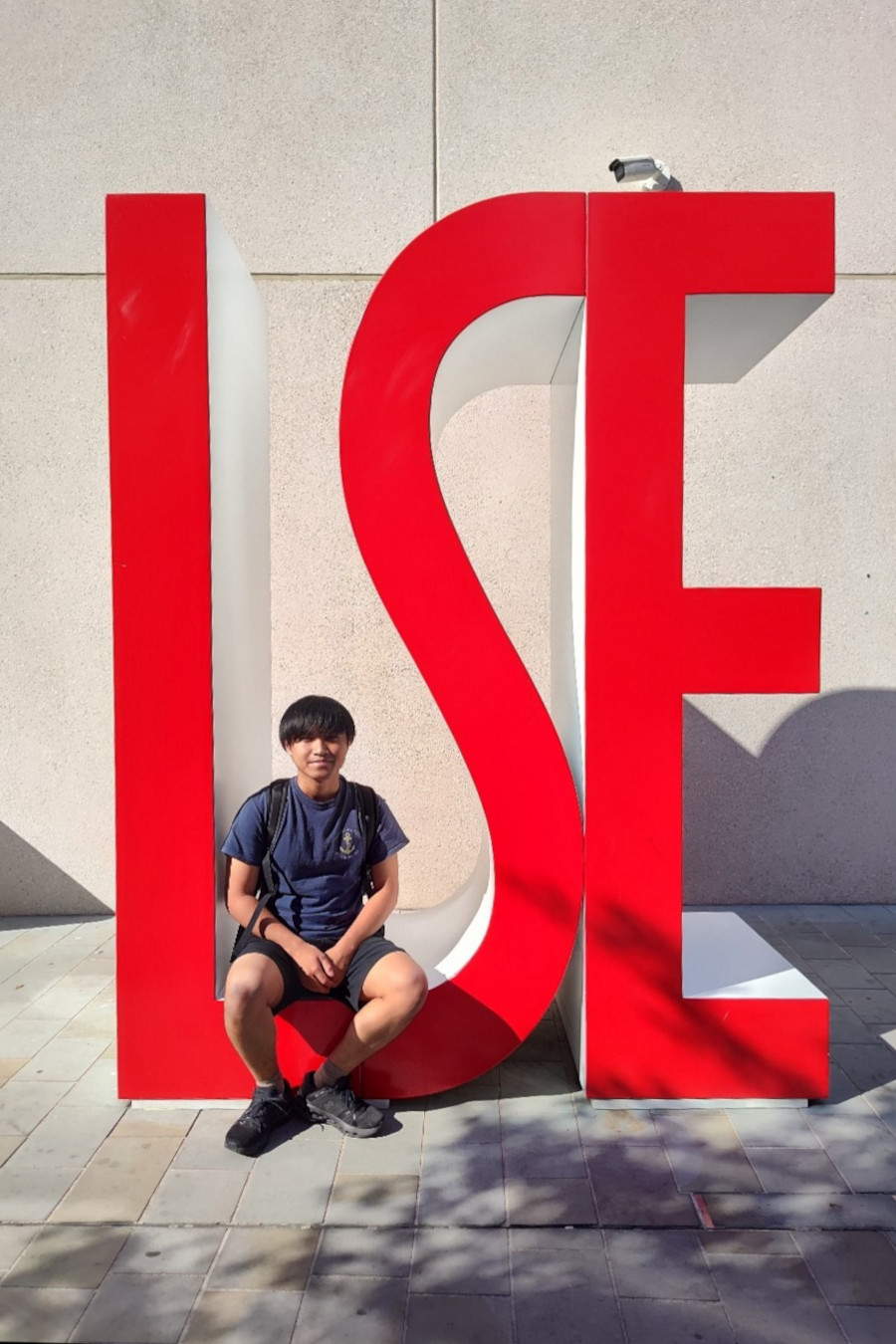
The course I took was Financial Markets and the Global Economy: The History of Bubbles, Crashes and Inflations. It literally covers the history of financial markets, the global economy, bubbles, inflation, and financial crises. I chose this course because, as a BSc Economics major, I thought that understanding the background and history of economics would help me deepen my overall knowledge. The courses offered at the LSE Summer School are at levels 1, 2, and 3 (referred to as 100, 200, and 300 levels, respectively). Even within the same level 1 course, the difficulty level varies depending on whether or not there are assignments and essay-style exams, which impacts how I study and spend the three weeks. My course was coded EC204, which is a 200-level course. Since it was an essay-style course, I studied hard for the three weeks, hoping to keep up. The assignment was a 1,500-word essay to be submitted in the second week of the three-week course. Rather than coming up with the essay topic myself, I had to choose one from several pre-prepared topics, and there were also guidelines on how to write, so the essay assignment wasn't too burdensome. The final week consisted of an all-writing exam, where students were required to choose two topics from eight and write about them. Since the exam was three weeks long, the essay format was tough, but it's a hurdle that anyone with a strong desire to learn could overcome.
Classes were divided into morning and afternoon sessions. In my case, I had a 90-minute small-group seminar in the morning and a 180-minute lecture in the afternoon. Other courses had a similar format. Classes were taught in a relay format, with professors rotating weekly. A different professor taught the seminar for all three weeks. The overall atmosphere was good, and the seminar included discussion time, making for a productive experience. One of the challenges I faced in class, especially during the seminar, was that everyone except me was from the United States, so not only did everyone speak quickly, but their level of conversation was also high. It took me a while to catch up. However, thanks to the attentiveness of the people around me and my proactive asking of questions, I quickly got used to the atmosphere and my studies improved. The discussions were more difficult than I expected, so if you're taking the same course, I recommend doing some preparation beforehand.
When it comes to social interactions, honestly, there's a limit to how many people you can meet and deepen friendships with in just three weeks. In fact, a few months before I went to LSE, after I'd completed my course payments, I was invited to join an app called Unibuddy via email. There were dorm and subject communities, and I used the group chats to find people taking the same course or living in the same dorm. Once we'd become friends, I exchanged social media accounts and continued to deepen our friendship until we met in person. For example, I actually became close with someone from Hong Kong in my subject and someone from Tunisia in my dorm. I also became friends with people from Morocco, India, Singapore, Australia, and London. We shared our respective country's backgrounds, history, economy, and culture, and we shared our struggles, past experiences, and future aspirations. It was a very valuable time, and many things resonated with me and inspired me.
I stayed in Sydney Webb Hall, a dormitory designated for those who received a full tuition and three-week accommodation scholarship from LSE. I was one of those recipients, so I spent three weeks there. It not only had a lovely plaza, but also public ping-pong and billiard tables, a movie room, a gym, a washing machine and dryer room, and a study room. I would have a coffee in the plaza before school in the morning, and after returning home, I would hang out with my dormmates or go to the gym. The rest of the time I spent studying, eating out, and sightseeing. I had never cooked before, so I took this opportunity to try it in the dorm kitchen, learning how to cook several times from a Londoner. Incidentally, there was a Sainsbury's supermarket in front of the dorm, and I often bought groceries and drinks there.
Through this study abroad experience, I was able to grow in my independence and initiative. I strongly felt that in an environment with a different language and culture, nothing will happen unless you take the initiative yourself. I was a little hesitant at first, but by taking the initiative to talk to not only my classmates but also the local people, and actively participating in events, I think I have acquired at least some ability to overcome situations on my own. I also realized the importance of cross-cultural understanding and flexibility. In particular, by coming into contact with values and customs that are completely different from those in Japan, I learned the importance of seeing things from the other person's perspective, rather than forcing my own way of thinking on them.
The day after my flight, I was riding a London bus from LSE to my dorm to check in. My suitcase was too big and blocking the aisle, so the driver scolded me and told me to put it in a specific spot. However, there were many other people with suitcases, so at first I didn't know who he was scolding. The driver was also wearing sunglasses, so I assumed it couldn't be me. Even though I was able to confirm it, he didn't say anything and became intimidated. It was my first time studying abroad alone in a faraway country, so I was anxious about many things. However, being scolded allowed me to once again feel the differences in the environment, culture, and personalities that I only realized when I was scolded, so it was a very satisfying three weeks. While the locals scolded me, they also ultimately offered kind words. The driver was one of them, and he ended by saying, "Experience gives you knowledge," which left a lasting impression on me. My experience studying abroad also reinforced the importance of not only acquiring knowledge through study but also using experience to prepare for the next step.
"Three weeks was a short time, but I was able to not only deepen my academic knowledge, but also to connect with people and gain an international and social perspective, and furthermore to cultivate a sense of independence. I will use these experiences to make my future school life even more meaningful, gain more experience, and study hard with the goal of achieving First-Class Honours in all my subjects at the University of London, while also cherishing my relationships with my classmates."
Classes were divided into morning and afternoon sessions. In my case, I had a 90-minute small-group seminar in the morning and a 180-minute lecture in the afternoon. Other courses had a similar format. Classes were taught in a relay format, with professors rotating weekly. A different professor taught the seminar for all three weeks. The overall atmosphere was good, and the seminar included discussion time, making for a productive experience. One of the challenges I faced in class, especially during the seminar, was that everyone except me was from the United States, so not only did everyone speak quickly, but their level of conversation was also high. It took me a while to catch up. However, thanks to the attentiveness of the people around me and my proactive asking of questions, I quickly got used to the atmosphere and my studies improved. The discussions were more difficult than I expected, so if you're taking the same course, I recommend doing some preparation beforehand.
When it comes to social interactions, honestly, there's a limit to how many people you can meet and deepen friendships with in just three weeks. In fact, a few months before I went to LSE, after I'd completed my course payments, I was invited to join an app called Unibuddy via email. There were dorm and subject communities, and I used the group chats to find people taking the same course or living in the same dorm. Once we'd become friends, I exchanged social media accounts and continued to deepen our friendship until we met in person. For example, I actually became close with someone from Hong Kong in my subject and someone from Tunisia in my dorm. I also became friends with people from Morocco, India, Singapore, Australia, and London. We shared our respective country's backgrounds, history, economy, and culture, and we shared our struggles, past experiences, and future aspirations. It was a very valuable time, and many things resonated with me and inspired me.
I stayed in Sydney Webb Hall, a dormitory designated for those who received a full tuition and three-week accommodation scholarship from LSE. I was one of those recipients, so I spent three weeks there. It not only had a lovely plaza, but also public ping-pong and billiard tables, a movie room, a gym, a washing machine and dryer room, and a study room. I would have a coffee in the plaza before school in the morning, and after returning home, I would hang out with my dormmates or go to the gym. The rest of the time I spent studying, eating out, and sightseeing. I had never cooked before, so I took this opportunity to try it in the dorm kitchen, learning how to cook several times from a Londoner. Incidentally, there was a Sainsbury's supermarket in front of the dorm, and I often bought groceries and drinks there.
Through this study abroad experience, I was able to grow in my independence and initiative. I strongly felt that in an environment with a different language and culture, nothing will happen unless you take the initiative yourself. I was a little hesitant at first, but by taking the initiative to talk to not only my classmates but also the local people, and actively participating in events, I think I have acquired at least some ability to overcome situations on my own. I also realized the importance of cross-cultural understanding and flexibility. In particular, by coming into contact with values and customs that are completely different from those in Japan, I learned the importance of seeing things from the other person's perspective, rather than forcing my own way of thinking on them.
The day after my flight, I was riding a London bus from LSE to my dorm to check in. My suitcase was too big and blocking the aisle, so the driver scolded me and told me to put it in a specific spot. However, there were many other people with suitcases, so at first I didn't know who he was scolding. The driver was also wearing sunglasses, so I assumed it couldn't be me. Even though I was able to confirm it, he didn't say anything and became intimidated. It was my first time studying abroad alone in a faraway country, so I was anxious about many things. However, being scolded allowed me to once again feel the differences in the environment, culture, and personalities that I only realized when I was scolded, so it was a very satisfying three weeks. While the locals scolded me, they also ultimately offered kind words. The driver was one of them, and he ended by saying, "Experience gives you knowledge," which left a lasting impression on me. My experience studying abroad also reinforced the importance of not only acquiring knowledge through study but also using experience to prepare for the next step.
"Three weeks was a short time, but I was able to not only deepen my academic knowledge, but also to connect with people and gain an international and social perspective, and furthermore to cultivate a sense of independence. I will use these experiences to make my future school life even more meaningful, gain more experience, and study hard with the goal of achieving First-Class Honours in all my subjects at the University of London, while also cherishing my relationships with my classmates."