
 3S
3S


Department of British and American Studies Research Close-up
What is a sustainable World Heritage site? Connecting the joy of tourism to preservation and protection
[Research] Rethinking the Essence and Future of World Heritage Sites: Visitor and Local Perspectives
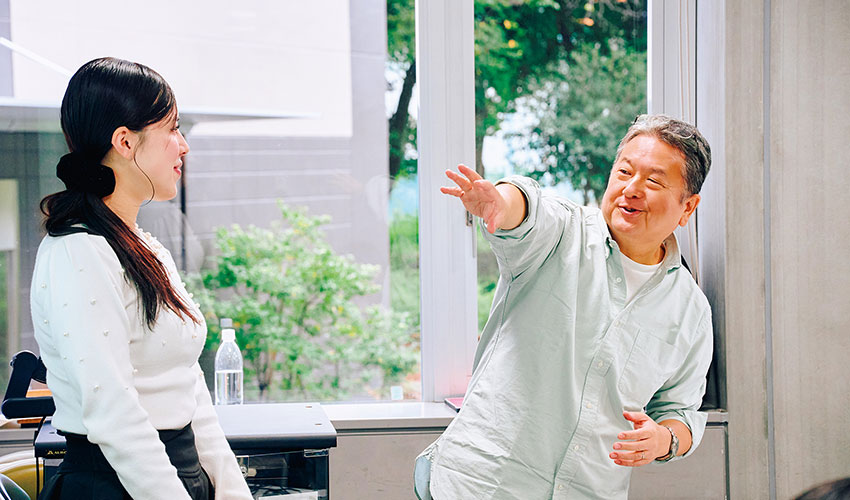
Visit unknown places, see stunning scenery, and be inspired by conversations with new people. Isn't this experience a travel attraction that everyone can relate to? Through the lens of a "World Heritage Site," I have deeply explored the charm of this journey through my 20 years of research in the UK. From multiple perspectives such as tourism, local communities, sustainability, and conservation activities, it is impossible to simply describe it as "World Heritage = Tourist Destination." The original purpose of UNESCO's World Heritage sites is preservation and protection. In Japan, it is often used as a strong tourism brand to revitalize the regional economy, but that is only a secondary effect. In my research, I will pursue the true value of World Heritage by recognizing this essence.
World Heritage sites also feature many cultural landscapes where daily life takes place. The increase in tourists (overtourism) often leads to worsening living conditions for residents and causes conflicts. The economic benefits of tourism are not distributed equally to all residents, and some people suffer disadvantages. Therefore, it is important for tourists to be mindful of the lives of residents.
Furthermore, we consider sustainability from three pillars: 'economic independence,' 'socio-cultural succession,' and 'environmental maintenance.' What does it mean to be fair to both future and modern generations? Conservation activities require participation not only from experts but also from local residents. In this way, we reconsider where we live and where we visit.
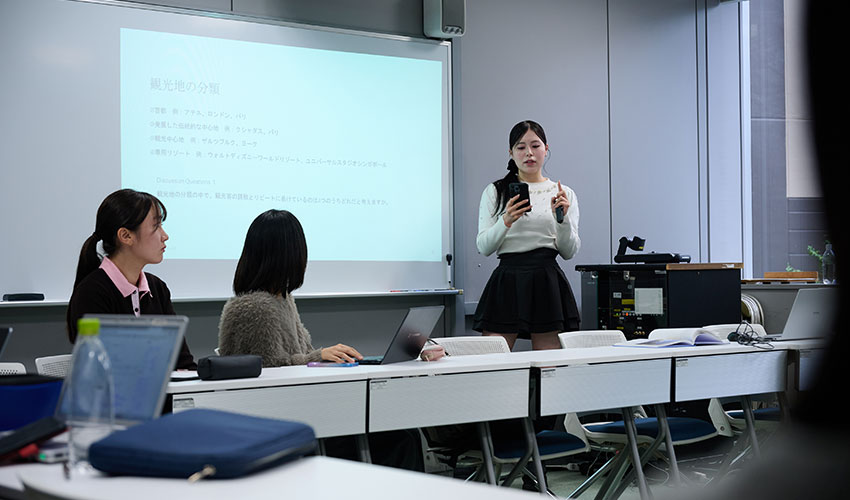
[Seminar] Broaden your horizons through English literature and develop the ability to share your thoughts
In the 'Tourism and Culture Seminar,' English specialized books are treated as textbooks. By utilizing English as a lingua franca (lingua franca), we aim to broaden your horizons by exposing you to the overwhelming amount of information and diverse ways of thinking from around the world. Students read literature, distinguishing between the parts they considered important and those that were not, and presented discussion points that sparked discussion. For example, on the theme "What would you think if your town were a tourist destination?", differing opinions based on each person's hometown and real-life situation emerged, making it very lively. In discussions, I try not to intervene and watch so that students can deepen their opinions with each other. In Japan, the "correct answer" tends to be emphasized, but what I value most in my seminar is "sharing" your opinions with everyone. Speaking up leads to contributions to the class and society.
What I hope students will cultivate through the seminar is the ability to think thoroughly on their own, the ability to organize their own ideas, and the ability to communicate them. In addition, I hope you will develop a critical perspective and the capacity to accept opinions different from your own. In addition to presentations and discussions, we also offer lectures with external guests that provide real, practical information beyond just theory. In the future, we plan to offer English classes taught by overseas experts. It is also important to actually interact with foreigners and understand the different cultures themselves, including elements beyond language such as greetings and communication etiquette. We hope students will actively go abroad and gain various experiences to cultivate a 'free spirit.'
Professor Takamitsu Jimura
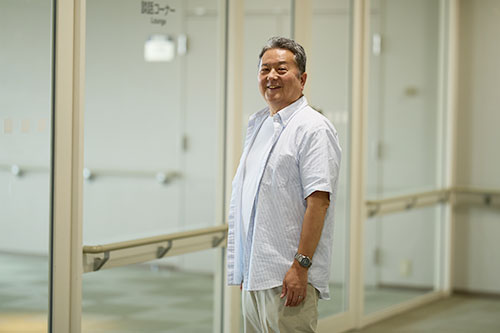
Graduated from Kobe University Faculty of Law. After holding master's degrees at the University of Greenwich, Nottingham Trent University (PhD), York St John University, and Liverpool John Moores University, he has held his current position since 2022. His areas of expertise are tourism, World Heritage sites, cultural heritage, and sustainability.
- See close-ups of research in other majors as well