
 3S
3S


Global Studies Program Research Close-up
What is the history of the "people crossing borders" hidden within the story of the nation called war?
Research
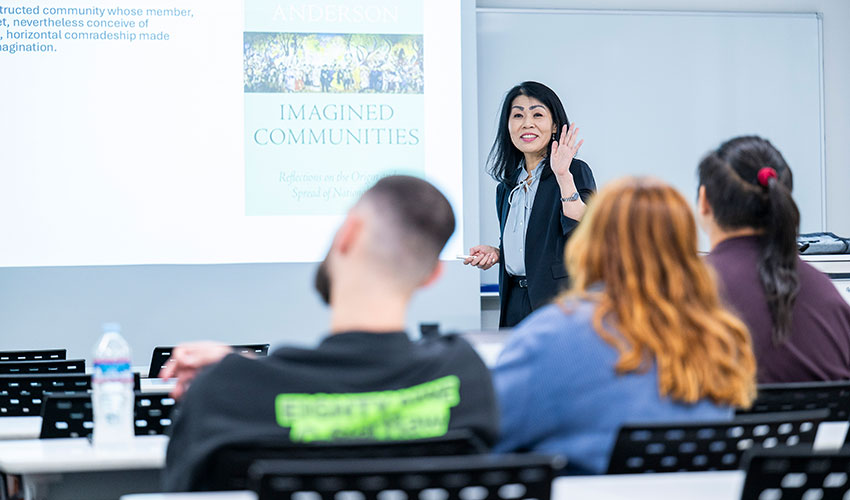
How have people, goods, and cultures moved and intersected across borders? The field called "Transnational History" is one that views history beyond the framework of a country. Among them, I have also gained experience living in more than 10 countries, and I study the history of the Asia-Pacific region from the perspectives of "movement" and "immigration." The current focus of research is an attempt to re-examine the Asia-Pacific War from the perspective of "movement." War is often told as a story of nation-states, but in reality, it has much more diverse and complex aspects. By standing in the eyes of people who "move," facts buried in history come to light. The goal is not political or economic history, but to depict the history of ordinary people. And it offers opportunities to think about what kind of person one should be, beyond countries and regions. The "facts" that happened in the past can serve as major hints for contemporary challenges, and history can serve as clues for considering the present and the future.
Seminar

In the seminar, we will read English-language literature discussing the history of the Asia-Pacific region from perspectives such as globalization and decolonization. In fiscal year 2025, we featured Australian anthropologist Ghasan Haj's 'White Nation' and exchanged views on white-centered ideology hidden in everyday life and the contradictions inherent in multiculturalism. To make discussions meaningful, our seminar style involves everyone reading literature in advance and submitting a report summarizing the summary and analysis. What I especially want you to value is to "think in connection with your own interests." By linking books and papers with your own awareness of the issues, your research topics will become even clearer. History is not a "study of memorization." What matters is developing the ability to think critically and logically based on the information you have gathered, and to develop your own arguments. This is the true meaning of studying history, and it will serve as a reliable guide for surviving in a rapidly changing society.
Yasuko Hassall Kobayashi Professor
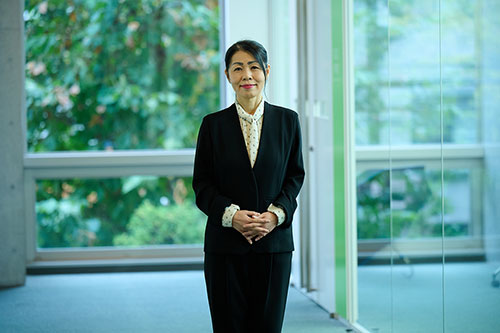
Completed the doctoral program (Ph.D.) in Asian History at the Graduate School of Asian and Pacific Studies, Australian National University. After serving as an associate professor at Ritsumeikan University's College of Global Liberal Arts, he has held his current position since 2024. His specialty is transnational history of migration and migration in the Asia-Pacific region.
- See close-ups of research in other majors as well
- Economics, Management and International Relations Program (EMIR Major) / Business Data Science Program (BDS Major) Research Close-up