
 3S
3S


Department of Finance Research Close-up
Aiming for a society where everyone can work, unaffected by economic fluctuations
[Research] Unable to Get a Job Due to the Recession. I want to reduce such unfairness, even just a little.
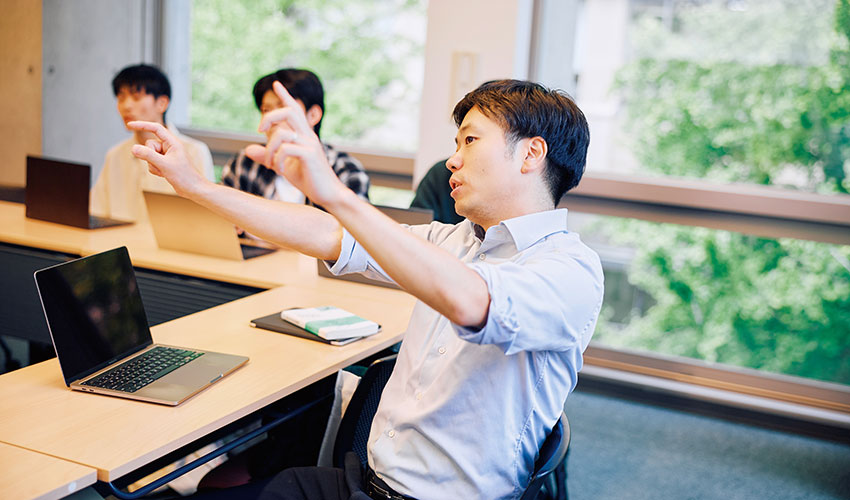
Financial markets have a significant impact on decision-making by society as a whole and companies due to fluctuations in interest rates, stock prices, and exchange rates. The "labor market," closely related to these movements, is the subject of my research. The economy constantly fluctuates like waves, but when a recession hits, there are situations where no one can find a job despite their efforts. Factors beyond your control can affect your life. To reduce such unfairness even a little, we aim to analyze the impact of economic cycles on the labor market and find more effective countermeasures. Originally involved in economic analysis and forecasting at a think tank, I faced the COVID-19 pandemic while studying abroad to hone my expertise. Seeing people who are unable to find jobs and facing hardship firsthand inspired me to start this research. Currently, we are analyzing 'labor market variables' such as the unemployment rate in Japan using the 'How is the Model?' This model, which shows the reality of matching companies and job seekers, was originally developed in the United States. To achieve more accurate results, we are also working on improving the model itself to better reflect the actual working conditions in Japan. One employment measure attracting attention during a recession is the form of "business closure." The reason Japan's unemployment rate did not worsen significantly during the COVID-19 pandemic was because government subsidies increased the number of people temporarily taking temporary leave. If you can take a break during a recession and later return to the same workplace, it may help prevent mismatches compared to looking for a job from scratch. At this stage, this is only a hypothesis, but we plan to work on improving and analyzing models based on this perspective in the future.
[Seminar] Unraveling a wide range of topics in economics and finance through data analysis
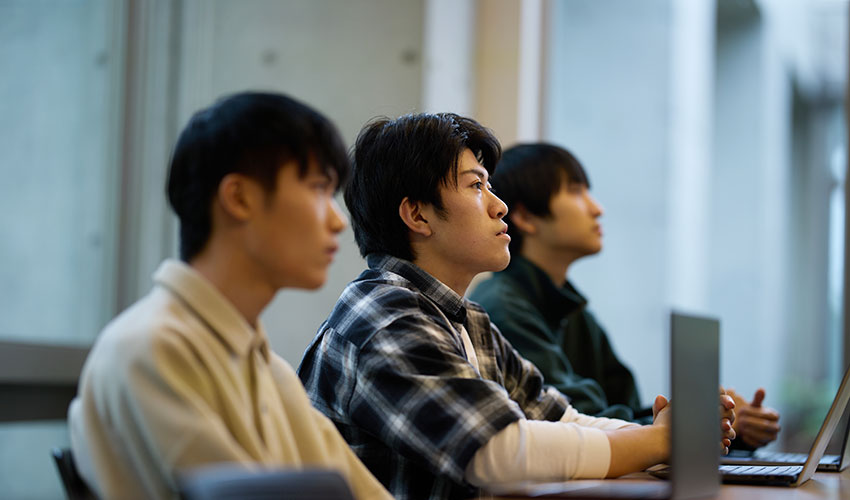
The seminar covers a wide range of topics related to the Japanese economy and finance. In the spring semester of the second year, students read through textbooks explaining the current state and challenges of the Japanese economy from various perspectives and presented their assigned areas. Drawing inspiration from fields and events that interest you, you will engage in individual research during the fall semester. In fiscal year 2025, a wide range of themes centered on finance were presented, including "Exchange rate forecasting based on exchange rate theory," "ESG investment," and "Japan's declining marriage rate." The greatest feature of this seminar is its emphasis on "data analysis." Even if you don't work directly handling data in the future, many people will likely be in a position to make decisions based on data. In order to develop the ability to correctly read results and make appropriate judgments, I believe that hands-on experience in analysis is essential. When dealing with data, you often face challenges when you don't get the results you want, but the experience gained through trial and error can be a great source of strength. In recent years, I feel that many students have entered with an interest in finance and economics due to dramas and other influences. The moments I personally find fascinating in this field are when complex and hard-to-see social phenomena can be clearly explained using theory and data, or when papers and texts offer new perspectives. In our seminars as well, I hope to create a space where each student can fully express their curiosity and spirit of inquiry in learning and inspire one another.
Tetsuaki Takano Associate Professor
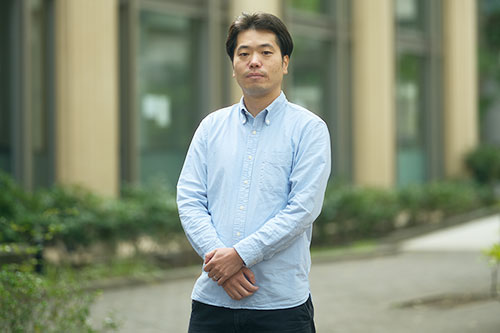
Completed the doctoral program at the Graduate School of Business Administration, Tokyo Metropolitan University. After working as an economist at the Japan Center for Economic Research, which conducts research and investigation on domestic and international fiscal, financial, and economic issues, he became an assistant professor at Musashi University Faculty of Economics in 2023 and an associate professor at the same institution in 2025. His areas of expertise are macroeconomics and labor economics.
- See close-ups on research from other departments as well