
 3S
3S


SIM Study Abroad Experience 2023
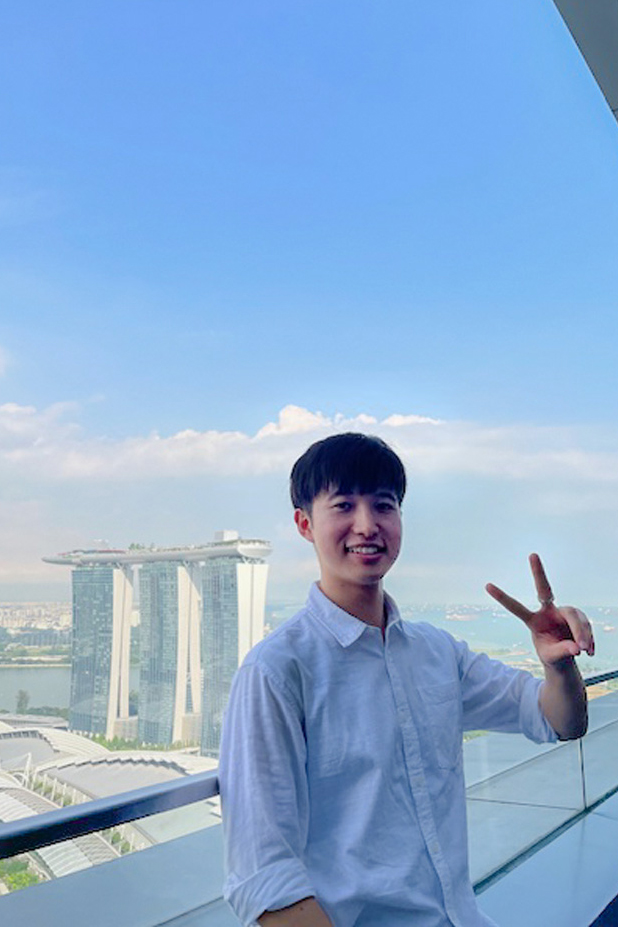
Faculty Faculty of Economics Department of Management PDP 7th batch (enrolled in April 2021)
Graduated from Fujieda Meisei Private High School Shizuoka Prefecture
■Studying at: Singapore Institute of Management
■Study period (local stay period): August 2023 to June 2024
During my 10-month study abroad at the Singapore Institute of Management, I learned a lot in terms of language, learning, culture, and economics.
The first is language. In Singapore, English and Chinese are the primary languages spoken, with other languages also used on public transportation. Living in a multilingual environment allowed me to gain a new perspective on my own English ability and languages other than Japanese and English, which I had not previously studied. As for English, I struggled to understand Singlish and other Asian forms of English, as I was unfamiliar with them. I felt stressed about being the only one unable to speak well among so many non-native speakers, and at first, I felt anxious about class discussions and everyday shopping. However, by learning the unique pronunciation and expressions of Singlish, researching everyday conversational phrases and taking notes of words my friends used to express my thoughts, I feel I have expanded my everyday conversational vocabulary. While I want to continue improving my English and become able to communicate with native English speakers, I also encountered many people who, like me, struggled with English speaking, pronunciation, and grammar. I learned that while they were learning English for academic or professional purposes, not everyone is fluent in English. Rather than feeling overly anxious about not being perfect at English, I realized it is important to learn English in my own way and be able to use it in my daily life even if I make a few mistakes.
It was also my first opportunity to come into contact with a language other than English, and I learned a lot. At the initial university orientation, all the Singaporean students spoke in Chinese, so I would sometimes force myself to speak to them in English, and I struggled to shop in the city because English wasn't understood. I felt that even just knowing a basic level of local language phrases and pronunciation, not just English, could open up new opportunities.
Regarding the second aspect of my studies, I was able to learn a lot beyond language, mainly through classes and exam preparation. In class, I struggled to understand the professor's Singlish, even before I understood the content of the textbook. Therefore, I devoted a lot of time to preparation and review so I could keep up. I made sure to secure study time by visiting the library before and after class. Furthermore, during group discussions, I couldn't keep up unless I prepared both in English and the class content, so I paid particular attention to preparation. When I didn't understand something in class, the large number of students sometimes meant I couldn't ask the professor after class. Instead, I would ask other students in the same class for help, or we would study together before exams. I also took a statistics course, but since the University of London didn't have a designated textbook, I read external references and prepared for and reviewed the material. As exams approached, classes were canceled, and I had fewer opportunities to meet with other Japanese students. However, when I didn't understand something, we would ask questions and cooperate to prepare for the exams. Planning and studying for exams while feeling the pressure of an exam in a different environment from Japan was mentally and physically demanding, but completing the exam to the end boosted my confidence.
The third point is that staying in Singapore for an extended period of time made me realize the significant differences in lifestyle and culture. These differences were mainly in rules and manners, as well as religion and ideology. Because Singapore has very strict laws, there is little trash on the streets and many places are kept clean. Public safety is also good, and you generally don't feel in danger. While many rules are similar to Japan, or even stricter than Japan, I felt that manners were often different from those in Japan. The volume of voices in public places, the manners of phone calls, and the manners of car drivers and those in the customer service industry are all different from Japanese standards. At first, I was confused by these differences, but I gradually got used to them and learned about and accepted the differences.
Differences in religion and ideology are one of the areas where I feel my perspective has broadened the most since studying abroad. First of all, Singapore has national holidays, each associated with a different religion. Christian, Buddhist, and Islamic holidays are holidays. I felt that the existence of people of different religions in Singapore and the national understanding of this is different from Japan. There were many differences not only in religion but also in ideology, but one that I was unfamiliar with was dietary habits. For example, halal food. While halal food is gradually becoming more common in Japan, I didn't really understand what it actually was. I noticed that there were different tray return points for halal and non-halal food, and a friend told me not to eat non-halal food at the same table as a halal person. This made me keenly aware of my lack of knowledge and experience regarding living in the same space as people with different customs. Furthermore, when choosing food, you can decide whether it is halal or vegetarian, and I felt that there is a system in place to accommodate people with different dietary habits, which is different from Japan.
The fourth point was the significant economic and price differences between developed and developing countries. During my stay, I visited several tourist attractions, but Marina Bay Sands and the surrounding financial district had a unique atmosphere I had never experienced in Japan. Even at night, the lights of the skyscrapers remained lit, making it seem as if business was running 24 hours a day. I once visited a bank branch in the financial district and had the opportunity to speak with the bank staff. They spoke about Singapore's significant role in Asia's economy, amidst a multinational and diverse environment, and I was deeply impressed by their words. Prices in Singapore are extremely high, and due to the weakening of the yen during my study abroad, I felt that prices would continue to rise. Because Singapore relies on imports for almost all food, everything is expensive. Food costs more than twice as much as it did in Japan, so I was constantly conscious of prices when shopping.
Meanwhile, I also visited Malaysia and Indonesia during my stay. Prices were cheaper than in Singapore, and in Malaysia in particular, prices were noticeably cheaper than in Singapore just across the bridge. The differences in infrastructure were also palpable, making it a very interesting experience. In Indonesia, the rupiah, the country's currency, is relatively weak, making prices even cheaper. The differences in infrastructure and sanitation compared to Singapore and Japan seemed even greater. In terms of prices, I looked at the price of a Big Mac in each country, and there were clear differences when comparing Singapore, Malaysia, Indonesia, and Japan.
I learned the above through this study abroad experience. I would like to utilize the experiences and new values I gained through this study abroad experience when I look for a job or enter society in the future, and become a person who can thrive in a global and diverse environment. In terms of language, I would also like to work hard every day to further improve my English ability.
Graduated from Fujieda Meisei Private High School Shizuoka Prefecture
■Studying at: Singapore Institute of Management
■Study period (local stay period): August 2023 to June 2024
During my 10-month study abroad at the Singapore Institute of Management, I learned a lot in terms of language, learning, culture, and economics.
The first is language. In Singapore, English and Chinese are the primary languages spoken, with other languages also used on public transportation. Living in a multilingual environment allowed me to gain a new perspective on my own English ability and languages other than Japanese and English, which I had not previously studied. As for English, I struggled to understand Singlish and other Asian forms of English, as I was unfamiliar with them. I felt stressed about being the only one unable to speak well among so many non-native speakers, and at first, I felt anxious about class discussions and everyday shopping. However, by learning the unique pronunciation and expressions of Singlish, researching everyday conversational phrases and taking notes of words my friends used to express my thoughts, I feel I have expanded my everyday conversational vocabulary. While I want to continue improving my English and become able to communicate with native English speakers, I also encountered many people who, like me, struggled with English speaking, pronunciation, and grammar. I learned that while they were learning English for academic or professional purposes, not everyone is fluent in English. Rather than feeling overly anxious about not being perfect at English, I realized it is important to learn English in my own way and be able to use it in my daily life even if I make a few mistakes.
It was also my first opportunity to come into contact with a language other than English, and I learned a lot. At the initial university orientation, all the Singaporean students spoke in Chinese, so I would sometimes force myself to speak to them in English, and I struggled to shop in the city because English wasn't understood. I felt that even just knowing a basic level of local language phrases and pronunciation, not just English, could open up new opportunities.
Regarding the second aspect of my studies, I was able to learn a lot beyond language, mainly through classes and exam preparation. In class, I struggled to understand the professor's Singlish, even before I understood the content of the textbook. Therefore, I devoted a lot of time to preparation and review so I could keep up. I made sure to secure study time by visiting the library before and after class. Furthermore, during group discussions, I couldn't keep up unless I prepared both in English and the class content, so I paid particular attention to preparation. When I didn't understand something in class, the large number of students sometimes meant I couldn't ask the professor after class. Instead, I would ask other students in the same class for help, or we would study together before exams. I also took a statistics course, but since the University of London didn't have a designated textbook, I read external references and prepared for and reviewed the material. As exams approached, classes were canceled, and I had fewer opportunities to meet with other Japanese students. However, when I didn't understand something, we would ask questions and cooperate to prepare for the exams. Planning and studying for exams while feeling the pressure of an exam in a different environment from Japan was mentally and physically demanding, but completing the exam to the end boosted my confidence.
The third point is that staying in Singapore for an extended period of time made me realize the significant differences in lifestyle and culture. These differences were mainly in rules and manners, as well as religion and ideology. Because Singapore has very strict laws, there is little trash on the streets and many places are kept clean. Public safety is also good, and you generally don't feel in danger. While many rules are similar to Japan, or even stricter than Japan, I felt that manners were often different from those in Japan. The volume of voices in public places, the manners of phone calls, and the manners of car drivers and those in the customer service industry are all different from Japanese standards. At first, I was confused by these differences, but I gradually got used to them and learned about and accepted the differences.
Differences in religion and ideology are one of the areas where I feel my perspective has broadened the most since studying abroad. First of all, Singapore has national holidays, each associated with a different religion. Christian, Buddhist, and Islamic holidays are holidays. I felt that the existence of people of different religions in Singapore and the national understanding of this is different from Japan. There were many differences not only in religion but also in ideology, but one that I was unfamiliar with was dietary habits. For example, halal food. While halal food is gradually becoming more common in Japan, I didn't really understand what it actually was. I noticed that there were different tray return points for halal and non-halal food, and a friend told me not to eat non-halal food at the same table as a halal person. This made me keenly aware of my lack of knowledge and experience regarding living in the same space as people with different customs. Furthermore, when choosing food, you can decide whether it is halal or vegetarian, and I felt that there is a system in place to accommodate people with different dietary habits, which is different from Japan.
The fourth point was the significant economic and price differences between developed and developing countries. During my stay, I visited several tourist attractions, but Marina Bay Sands and the surrounding financial district had a unique atmosphere I had never experienced in Japan. Even at night, the lights of the skyscrapers remained lit, making it seem as if business was running 24 hours a day. I once visited a bank branch in the financial district and had the opportunity to speak with the bank staff. They spoke about Singapore's significant role in Asia's economy, amidst a multinational and diverse environment, and I was deeply impressed by their words. Prices in Singapore are extremely high, and due to the weakening of the yen during my study abroad, I felt that prices would continue to rise. Because Singapore relies on imports for almost all food, everything is expensive. Food costs more than twice as much as it did in Japan, so I was constantly conscious of prices when shopping.
Meanwhile, I also visited Malaysia and Indonesia during my stay. Prices were cheaper than in Singapore, and in Malaysia in particular, prices were noticeably cheaper than in Singapore just across the bridge. The differences in infrastructure were also palpable, making it a very interesting experience. In Indonesia, the rupiah, the country's currency, is relatively weak, making prices even cheaper. The differences in infrastructure and sanitation compared to Singapore and Japan seemed even greater. In terms of prices, I looked at the price of a Big Mac in each country, and there were clear differences when comparing Singapore, Malaysia, Indonesia, and Japan.
I learned the above through this study abroad experience. I would like to utilize the experiences and new values I gained through this study abroad experience when I look for a job or enter society in the future, and become a person who can thrive in a global and diverse environment. In terms of language, I would also like to work hard every day to further improve my English ability.