
 3S
3S


Department of Management Research Close-up
Decoding the Reality of M&A in Japan from Accounting Information
[Research] Are there more companies in Japan that are 'bought cheap' compared to the US?
Among companies offering familiar services such as video streaming services, social media, and games, there are quite a few examples that have grown through repeated acquisitions and mergers. I am conducting research focusing on accounting related to such "merger and business acquisitions (M&A)," particularly in cases where "negative goodwill" arises. When a company acquires another firm, it is common to pay an amount exceeding the net asset value, taking into account the "invisible value" such as brand power. However, conversely, the acquisition amount may be less than the net asset value, and the difference is called a "negative goodwill." For sellers, such cases may seem unlikely at first glance because they end up selling at low prices. However, in fact, compared to the United States, Japan tends to experience more cases of negative goodwill. If we can clarify the reasons behind this, we may find hints for creating accounting rules that better reflect Japan's actual conditions. The difficulty of this research lies in the effort required for data collection; detailed information about M&A is not included in the financial statements itself, and it must be manually retrieved from textual information called notes. What has become clear from steady collection and analysis is that rather than selling companies being bought cheaply by buyers, seller companies hold many assets with hard-to-determine valuations and low stock price levels. Furthermore, it has become clear that negative goodwill tends to arise from M&A in industries with sluggish performance. I will continue my research and clarify the characteristics of Japanese companies' transactions and decision-making in M&A.
[Seminar] Analyzing Companies Based on Actual Accounting Information by Choosing Themes
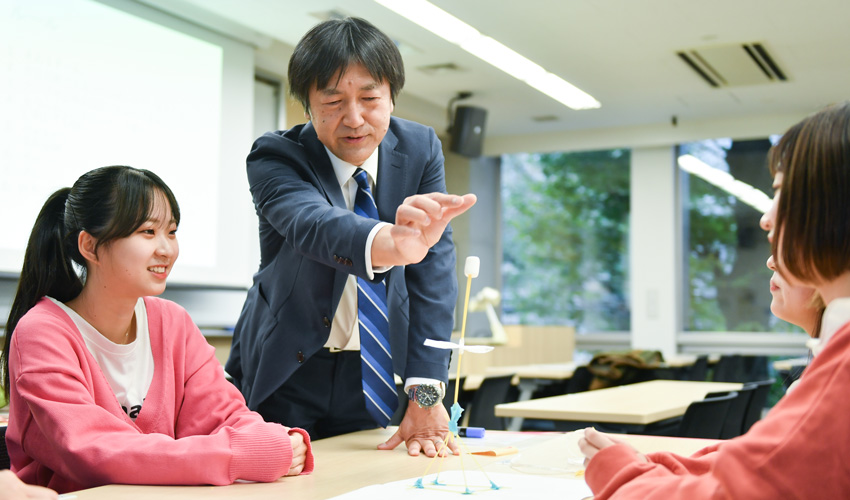
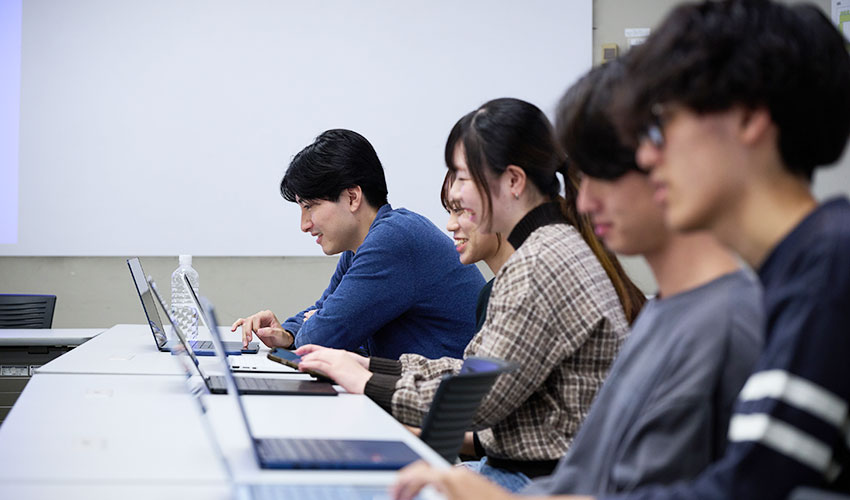
The main focus of my seminar is "corporate analysis using accounting information." In the second year, after learning Specialized Knowledge knowledge to interpret securities reports disclosed by listed companies, students are divided into groups to begin analysis. In fiscal year 2025, we chose either a theme of 'loss-making companies' or 'changes in business models,' decided on specific research topics and companies to analyze, and conducted our own research. In the past, I have also challenged myself with themes that differ from typical corporate analysis, such as educational corporations, NPOs, and overseas sports team operators. In the third year, we conduct more specialized analyses focused on accounting systems, leading to graduation research in the fourth year. When looking at actual accounting information, it is not uncommon for analysis to progress as desired due to reasons such as "the content differs from what was learned in textbooks" or "disclosures vary by company." Such "unexpected" situations are precisely the real joy of learning accounting in practice, and it is an opportunity to develop the ability to solve problems using knowledge and information. For that reason, in my daily teaching, I value an attitude of exploring and enjoying various insights and questions together with my students. When you think of accounting, you might imagine it being a system that mechanically derives numbers according to rules. However, in reality, these are human actions that reflect the intentions and judgments of the managers, and some transactions do not have fixed rules at all. I hope you will experience the breadth and appeal of accounting while acquiring solid knowledge that will be useful in real life.
Associate Professor Yukari Takahashi
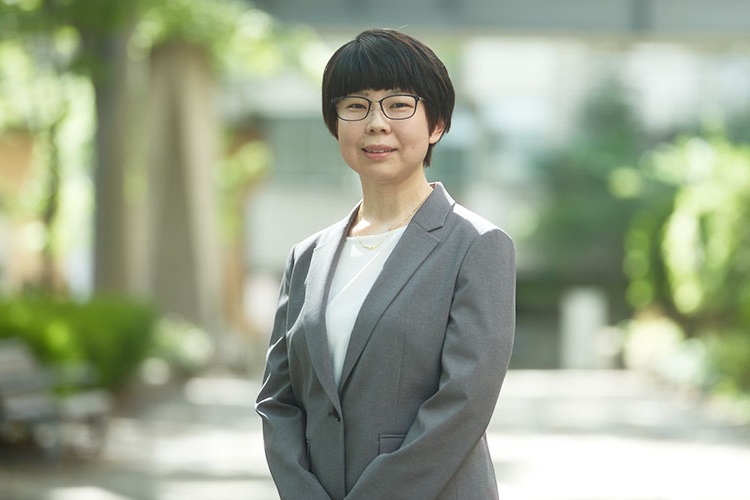
Completed Doctral Program at the Graduate School of Commerce, Hitotsubashi University. PhD (Business). After serving as an assistant professor in the Department of Business Administration, Faculty of Urban Liberal Arts, Tokyo Metropolitan University (now Tokyo Metropolitan University), he has held his current position since 2015. His specialty is financial accounting, with a particular focus on accounting related to business combinations.
- See close-ups on research from other departments as well