
 3S
3S


Information and Social Design Program Special Roundtable
Capturing the "now" based on data and designing the "future" of the information society
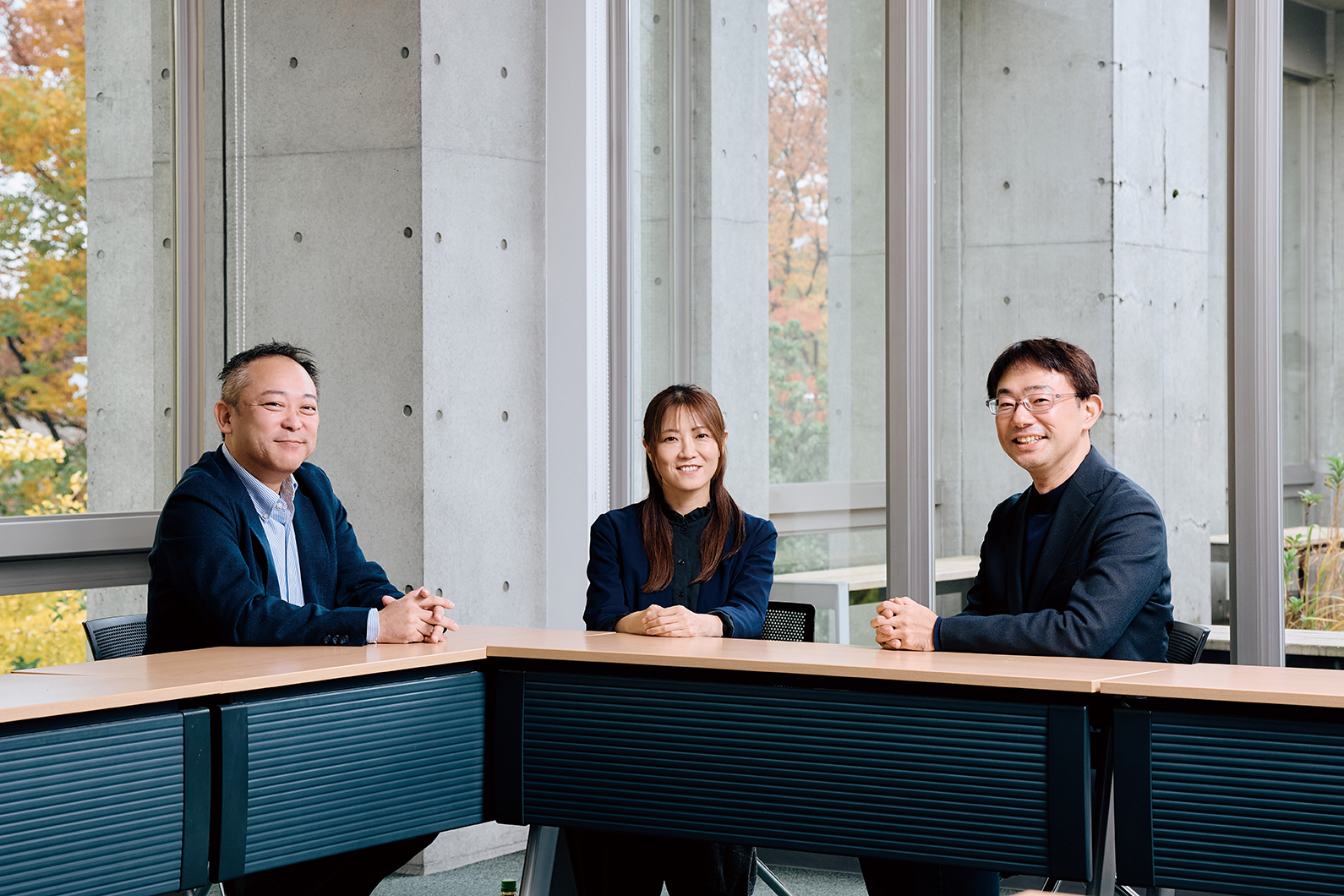
Information and Social Design Program to be opened in fiscal year 2027. What is the content of their studies, their social significance, and what career paths are expected? Three Faculty of Sociology faculty members specializing in related fields discussed from their respective perspectives.
Professor Masahiko Shoji
Information and Social Design Program Curriculum Review Task Force
[Affiliation] Department of Socio-Media Studies Socio-Media Studies Program
[Specialization] Information sociology, information and communication policy. Mainly engaged in research on informatization of local communities and the spread and utilization of open data.
[Affiliation] Department of Socio-Media Studies Socio-Media Studies Program
[Specialization] Information sociology, information and communication policy. Mainly engaged in research on informatization of local communities and the spread and utilization of open data.
Associate Professor Natsuho Tomabechi
Statistics and Social Research Unit
[Affiliation] Department of Sociology Sociology Program
[Specialties] Econometric sociology, family sociology, educational sociology. Analyzing data using statistical methods to examine contemporary social issues related to family and education.
[Affiliation] Department of Sociology Sociology Program
[Specialties] Econometric sociology, family sociology, educational sociology. Analyzing data using statistical methods to examine contemporary social issues related to family and education.
Associate Professor Atsushi Udagawa
Information and Social Design Program Curriculum Review Task Force
[Affiliation] Department of Socio-Media Studies Socio-Media Studies Program
[Specialization] Media theory, media design, etc. In recent years, he has explored new approaches to media literacy in response to changes in the information environment.
[Affiliation] Department of Socio-Media Studies Socio-Media Studies Program
[Specialization] Media theory, media design, etc. In recent years, he has explored new approaches to media literacy in response to changes in the information environment.
—— A small group of 45 students will be launched, wel Information and Social Design Program coming a new frontline faculty member. Please tell us about the characteristics and social significance of this learning.
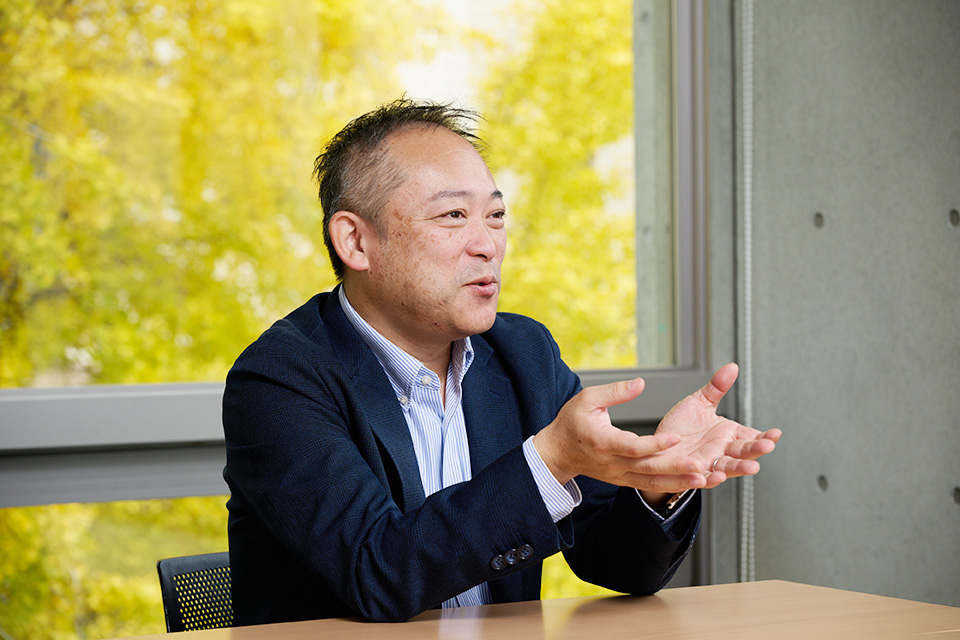
ShojiFrom politics and economics to business, healthcare, education, sports, and even entertainment, "information" is fundamentally transforming every area of society. On the other hand, there are many situations where legal and social systems have not kept pace with the rapid development of AI and digital technologies. What is needed now is to "correctly grasp the current state of the information society based on data and design a new society," and I believe this is the pillar of Information and Social Design Program learning.
TomabechiFrom the perspective of a sociology specialist, I also feel that it is a distinctive feature of acquiring solid practical skills. Sociology, which clarifies the current state and challenges of society, is, so to speak, the study of "creating a diagnosis of society." In addition to the knowledge necessary for diagnosis, acquiring 'treatment skills' such as data analysis, AI, and programming is a major advantage.
ShojiThat's right. Furthermore, to fully harness its "treating" power, it is essential to understand the "social context" behind the data and information. For example, who collected the data and how, and whether there is any bias in the results generated by AI depending on the country or region of development. Focusing on this background and handling data and information is a unique feature of the new major placed within the Faculty of Sociology.
UdagawaA major feature of this approach is that it is "interdisciplinary." When you think of 'data science,' many people might think of mathematics or statistics, and when you think of 'design,' you might think of art and architecture. However, the new major learns not to master a specific field, but to bring together diverse Specialized Knowledge to tackle social issues. By taking an approach that transcends the boundaries of humanities and sciences, we will surely discover new solutions that have never existed before.
TomabechiFrom the perspective of a sociology specialist, I also feel that it is a distinctive feature of acquiring solid practical skills. Sociology, which clarifies the current state and challenges of society, is, so to speak, the study of "creating a diagnosis of society." In addition to the knowledge necessary for diagnosis, acquiring 'treatment skills' such as data analysis, AI, and programming is a major advantage.
ShojiThat's right. Furthermore, to fully harness its "treating" power, it is essential to understand the "social context" behind the data and information. For example, who collected the data and how, and whether there is any bias in the results generated by AI depending on the country or region of development. Focusing on this background and handling data and information is a unique feature of the new major placed within the Faculty of Sociology.
—— Please tell us about the key points of the curriculum and any distinctive classes.
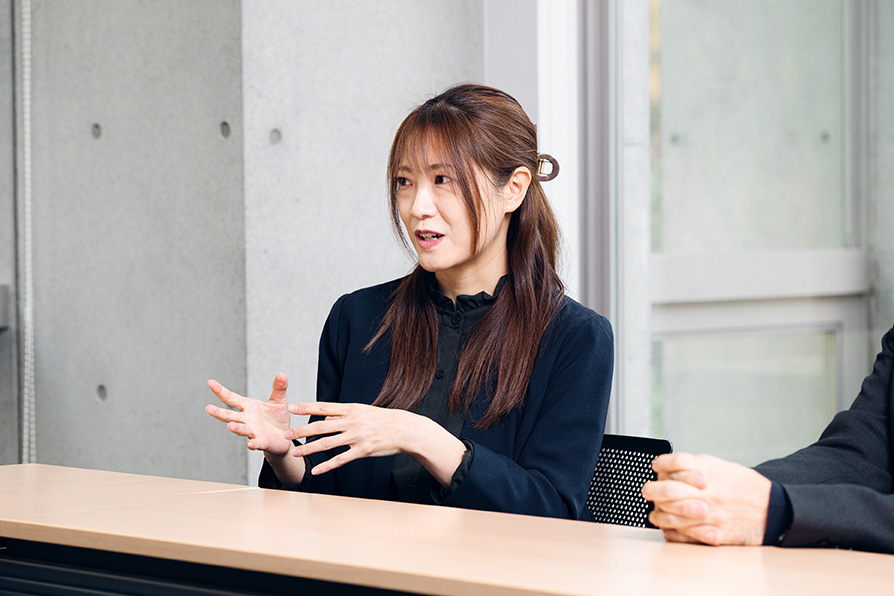
ShojiThe core of the curriculum is the "Methodology Subject," which teaches the basics of data science, and the "Development Subject," which uses the skills you have developed to interpret various social phenomena. In the methodology subjects, in addition to programming and statistics, there are also subjects such as 'Data Visualization,' which teaches visual representation of data. One of the appeals is that you can comprehensively learn the data analysis process, from collection and organization to visualization.
UdagawaThe subjects offered cover a wide range of topics, including sports, public health, and cognitive science. Learning that combines diverse fields with data science is truly the true appeal of the new major. We also focus on "corporate collaboration," offering courses where we analyze data provided by actual companies to solve problems, and opportunities to utilize data from major portal sites.
TomabechiCompared to dummy data or past survey data, analyzing actual data is significant in that it allows us to grasp the "present" of society. Furthermore, when using real data, analysis often does not proceed as planned. I believe we can learn a lot from the process of trying and trying to identify the causes.
ShojiTo put it further, I hope people will face the "problem where even data doesn't even exist" and tackle it starting with data collection. To achieve this, it is also important to broaden your horizons by engaging with diverse knowledge including subjects from other faculties and departments. I hope they will take on the challenge of integrating new fields with data science and pioneer their own learning.
UdagawaThe subjects offered cover a wide range of topics, including sports, public health, and cognitive science. Learning that combines diverse fields with data science is truly the true appeal of the new major. We also focus on "corporate collaboration," offering courses where we analyze data provided by actual companies to solve problems, and opportunities to utilize data from major portal sites.
TomabechiCompared to dummy data or past survey data, analyzing actual data is significant in that it allows us to grasp the "present" of society. Furthermore, when using real data, analysis often does not proceed as planned. I believe we can learn a lot from the process of trying and trying to identify the causes.
ShojiTo put it further, I hope people will face the "problem where even data doesn't even exist" and tackle it starting with data collection. To achieve this, it is also important to broaden your horizons by engaging with diverse knowledge including subjects from other faculties and departments. I hope they will take on the challenge of integrating new fields with data science and pioneer their own learning.
——What kind of career paths do you envision after graduation?
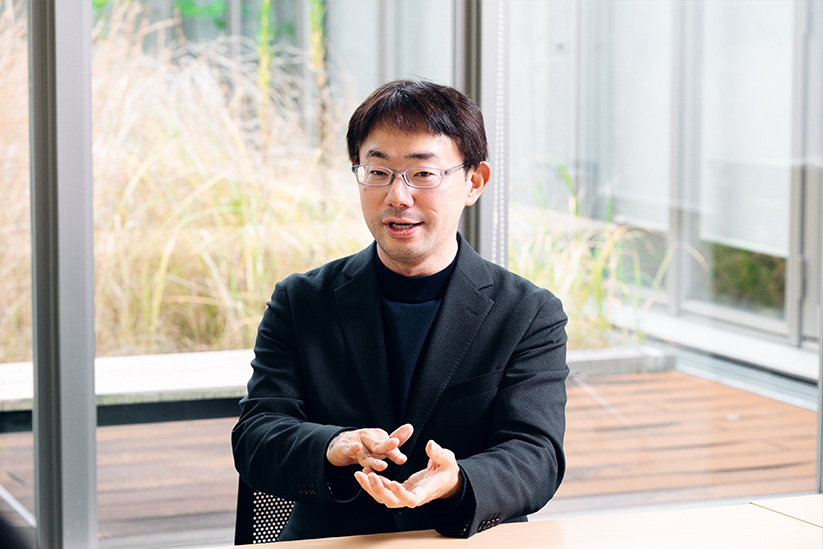
UdagawaSince new "designs" are required in every aspect of modern society, I believe the career paths are very broad. For example, it can be said that various possibilities are expanding, such as designing social systems and ethics, or designing business mechanisms, marketing, and communication.
TomabechiI agree. And whatever path you choose, what will be useful is the "thinking" you have honed through data analysis. Numbers and formulas are merely 'tools'; what matters is how we perceive social phenomena and construct our logic. I believe the logical and scientific thinking nurtured through this process will be a great asset. Udagawa: That can be seen as the power to connect the "symbols" of numbers and data with "reality." AI can handle vast amounts of data, but it is the human role to relate it to real challenges. I believe that the perspective that connects data and society will be increasingly demanded in the coming era.
ShojiI think each field's way of working is diverse. In Dr. Tomabechi's earlier example, when "treatment" is based on a "medical certificate," it is often done as a team. I hope that people who take on the role of "editors," who coordinate experts in various fields and coordinate the whole, will also develop from their new majors.
TomabechiI agree. And whatever path you choose, what will be useful is the "thinking" you have honed through data analysis. Numbers and formulas are merely 'tools'; what matters is how we perceive social phenomena and construct our logic. I believe the logical and scientific thinking nurtured through this process will be a great asset. Udagawa: That can be seen as the power to connect the "symbols" of numbers and data with "reality." AI can handle vast amounts of data, but it is the human role to relate it to real challenges. I believe that the perspective that connects data and society will be increasingly demanded in the coming era.
—— Please give a message to everyone at Prospective Students.
ShojiYour casual actions and familiar phenomena may actually be part of major social changes. We are looking for people who are eager and motivated to find their own questions and explore them rather than learning existing knowledge by conventional methods.
UdagawaSome people may say, "I'm interested but not good at math," or "I'm anxious about programming," but with the power of AI, there are many things you can solve. Make full use of technology in the learning process itself and take on unknown challenges.
TomabechiFor those who want to be involved in society or contribute, this major offers learning opportunities to shape those feelings in diverse ways. We Faculty of Sociology faculty are also looking forward to the addition of new majors and the emergence of various chemical reactions within two departments and three majors.
UdagawaSome people may say, "I'm interested but not good at math," or "I'm anxious about programming," but with the power of AI, there are many things you can solve. Make full use of technology in the learning process itself and take on unknown challenges.
TomabechiFor those who want to be involved in society or contribute, this major offers learning opportunities to shape those feelings in diverse ways. We Faculty of Sociology faculty are also looking forward to the addition of new majors and the emergence of various chemical reactions within two departments and three majors.