
 3S
3S


How to proceed with the project
A two-step system to help you grow
In the first half, we will analyze the issues from different angles of each faculty while applying the expertise of the faculty to the issues from companies. After going through the preliminary survey stage for each department, and presenting the results at the mid-term presentation, we enter the cross-faculty activity stage, where we share information on the results of the survey so far as a joint team, confirm the various issues surrounding the company in charge, the company's response status, and then discuss how we want to create our future. Then, in order to compile the proposals thought by the team into a booklet, we decide on the concept and content, and write and layout the article. At the final debriefing meeting, the booklet is distributed to the person in charge of the company, evaluated it, and the proposal for the issue and the process of completing the booklet are presented through what kind of discussion and research was completed.
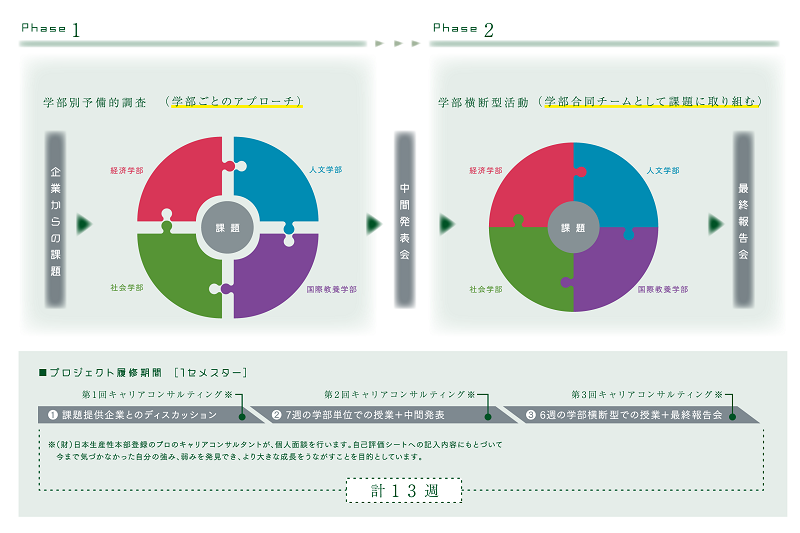
How to proceed with the project
STEP 1: Presentation from the project provider
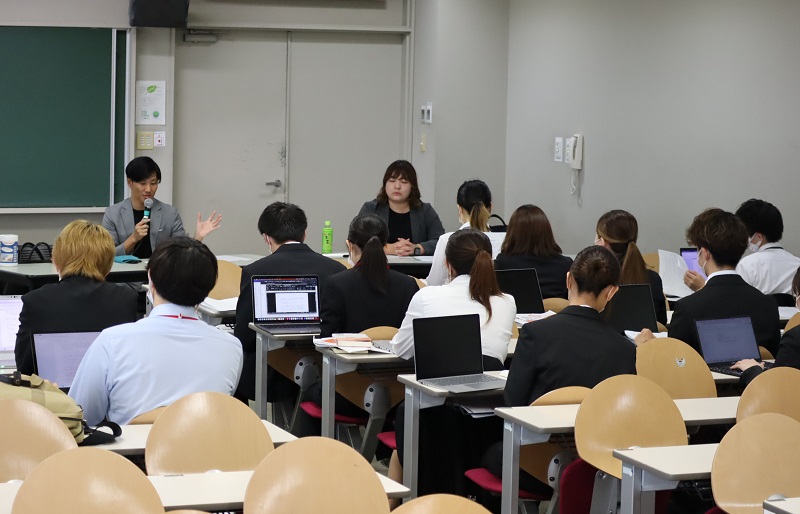
On Saturday, we invite the person in charge of the project provider to receive a presentation on the company overview. The challenge from the company is the "proposal for the issues surrounding the company". After the presentation, we will form a cross-faculty team, introduce ourselves to the person in charge, and then ask questions directly from various perspectives, such as the company's management policy and philosophy.
STEP2: Phase 1 - Preliminary survey by faculty
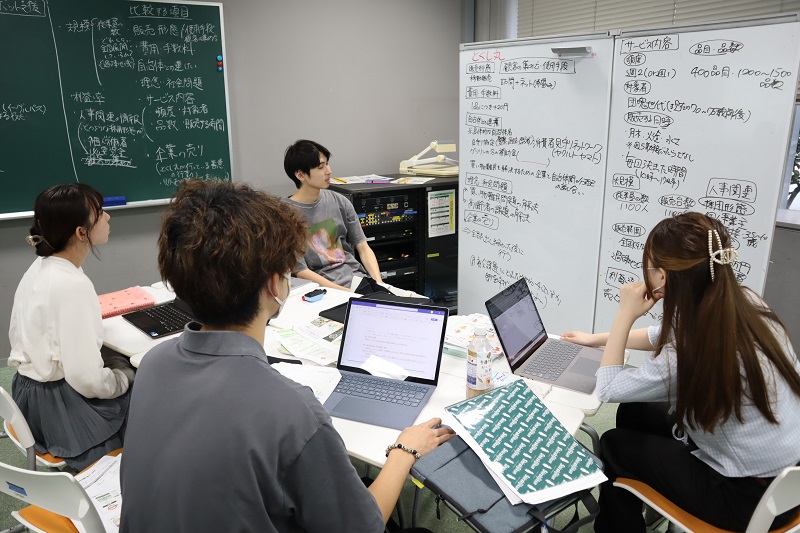
Students are divided by faculty and conduct thorough research on their assigned companies, carrying out preliminary investigations to determine the policies and content necessary for the "Proposals for Addressing the Challenges Surrounding the Company" in the latter half of the program. The content is tailored to the expertise of each faculty, including: <Analyzing the reality of corporate activities from multiple perspectives>, <Exploring corporate culture using history and philosophy as clues>, and <Investigating diverse stakeholders involved with the company to understand its relationship with society and its mechanisms, and analyzing the company's social responsibility and contributions>. At the interim presentation, students will present their research findings to company representatives.
STEP3: Phase 2 - Interdisciplinary activities
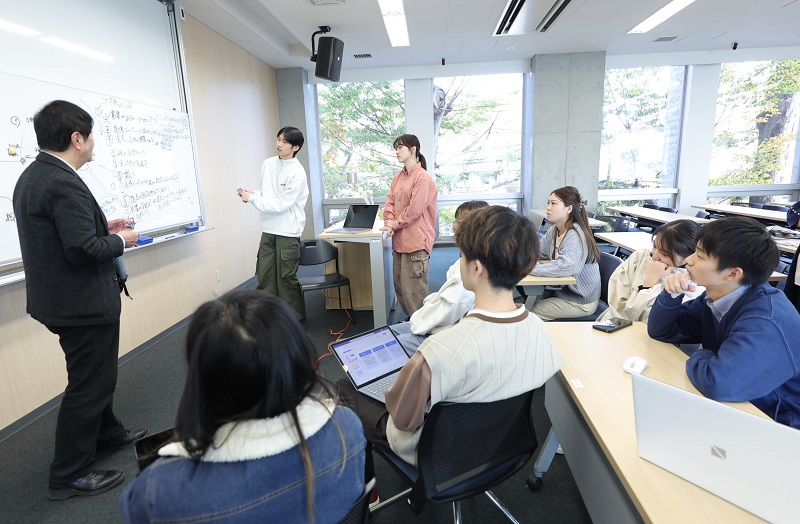
After the interim presentation, the interdisciplinary teams will officially begin their work. They will bring together the information gathered in Phase 1, pooling the knowledge from each faculty to develop proposals for solving the challenges surrounding the companies. They will also maintain close contact with company representatives, engaging in numerous discussions to determine concepts, content, and designs that are appropriate to the company's philosophy, and will create a booklet.
STEP4: Final report meeting
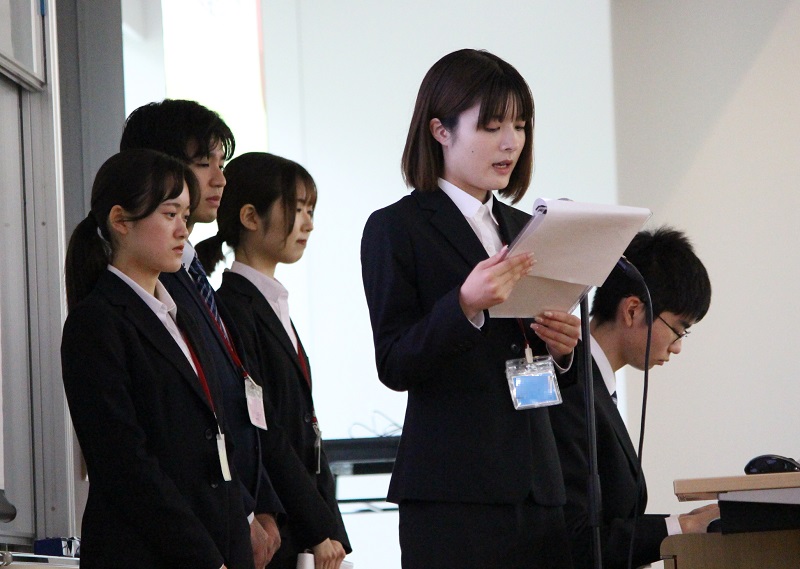
At the final debriefing session, we will simply bind the "booklet" we actually produced and distribute it to companies and visitors. In addition, we will present the process by which we completed the proposal and booklet for the issues surrounding the company, and through what kind of discussion and research we went through. It is a day to test whether you were able to create something that exceeded the expectations of the person in charge of the company.
Introducing our own SNS to facilitate information sharing

In this project, we use our own SNS to facilitate smooth communication between company representatives and members of different faculties. In addition, in the blog, students write about their activities for each day of class. This is a good opportunity to reflect on themselves, and is useful for self-analysis and self-promotion in job hunting.
|
Examples of use
|
|
|
Faculty
|
After each seminar, students post about the contents of the class on a blog, providing information to other faculty members working on projects and facilitating collaboration.
|
|
Join each seminar community and post your advice and opinions.
|
|
|
Student
|
At the end of each seminar, students reflect on what they have learned and write in a blog to keep as a record of their growth.
|
|
In communities based on each seminar and each company, students from the same seminar and from other departments share information and discuss division of labor, etc.
|
|
|
If you have any questions for the company that arise while working on the assignment, post them in the community of the company in question.
|
|
|
Company representative
|
Answer questions from students in a community run by our students.
|
Career counseling to help you get to know yourself
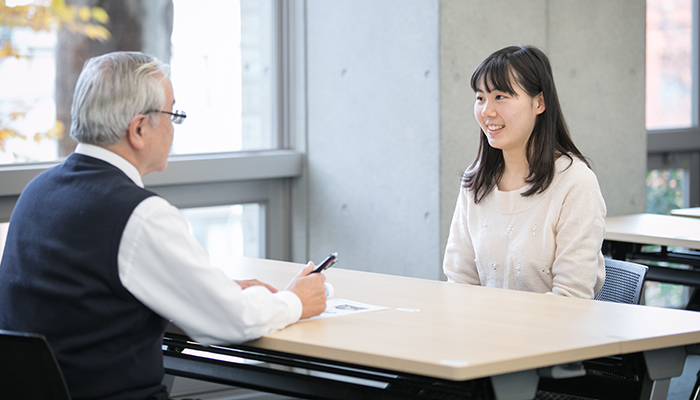
Advice from a career consultant* is not just an evaluation of results, but an important element in encouraging the growth of each individual student. A professional career consultant registered with the Japan Productivity Center will conduct individual interviews three times in total: before the seminar begins (pre-seminar), after the midterm presentation (mid-seminar), and after the final presentation (post-seminar). By having a thorough discussion with the professional based on the details of the self-evaluation sheet, students can discover their own strengths and weaknesses that they had not noticed before, and by utilizing these in seminar activities, the aim is to encourage greater growth.
*Career consultants are professionals who provide various types of consultation and support to people seeking employment. They provide individual consultations to help job seekers design their careers based on their aptitude, abilities, experience, etc., and to help them make effective career choices and develop their professional skills.