
 3S
3S


Environmental Fieldwork around Musashi
This course is conducted in the form of relay lectures by professors from three fields: biology, physics, and chemistry. The natural environment of Musashi University campus is engraved with the history of Musashi Gakuen. The current environment of Musashi University campus, which is a historical heritage, is investigated through observation and survey.
Through their own research and thought, I hope that the students will look at Musashi University 's long history of protecting the environment from the perspective of the natural environment and carry on this tradition. However, due to the COVID-19 pandemic, fieldwork and school forest thinning could not be carried out during the summer holidays in 2020 and 2021. Although this prevented the spread of COVID-19 during regular classes, unfortunately, the opportunities for experiential learning that had been accumulated up until now were lost. Of course, there were great results from learning through remote classes, but I hope that the students will reconnect with Musashi University 's natural environment once the COVID-19 pandemic has subsided.
In the chemistry field, we are exploring the Musashi's environment with the theme of "water." In the physics field, we are focusing on how to organize and statistically analyze data collected through experiments and observations. In the biology field, we are dealing with the biodiversity of Musashi.
Through their own research and thought, I hope that the students will look at Musashi University 's long history of protecting the environment from the perspective of the natural environment and carry on this tradition. However, due to the COVID-19 pandemic, fieldwork and school forest thinning could not be carried out during the summer holidays in 2020 and 2021. Although this prevented the spread of COVID-19 during regular classes, unfortunately, the opportunities for experiential learning that had been accumulated up until now were lost. Of course, there were great results from learning through remote classes, but I hope that the students will reconnect with Musashi University 's natural environment once the COVID-19 pandemic has subsided.
In the chemistry field, we are exploring the Musashi's environment with the theme of "water." In the physics field, we are focusing on how to organize and statistically analyze data collected through experiments and observations. In the biology field, we are dealing with the biodiversity of Musashi.
Anyone who visits Musashi University for the first time is amazed at the abundance of greenery in the midst of Tokyo, a megalopolis that is constantly undergoing rapid change. This landscape was created and has been protected by Musashi's "tradition of protecting greenery." When the site was purchased 90 years ago, most of the land was farmland, with a few rice paddies along what is now the Susuki River. It was truly a suburban farming village. The trees planted by students at the time around the dusty athletic field and along the Susuki River are the trees of Musashi today. Records show that there was also a farm.
-
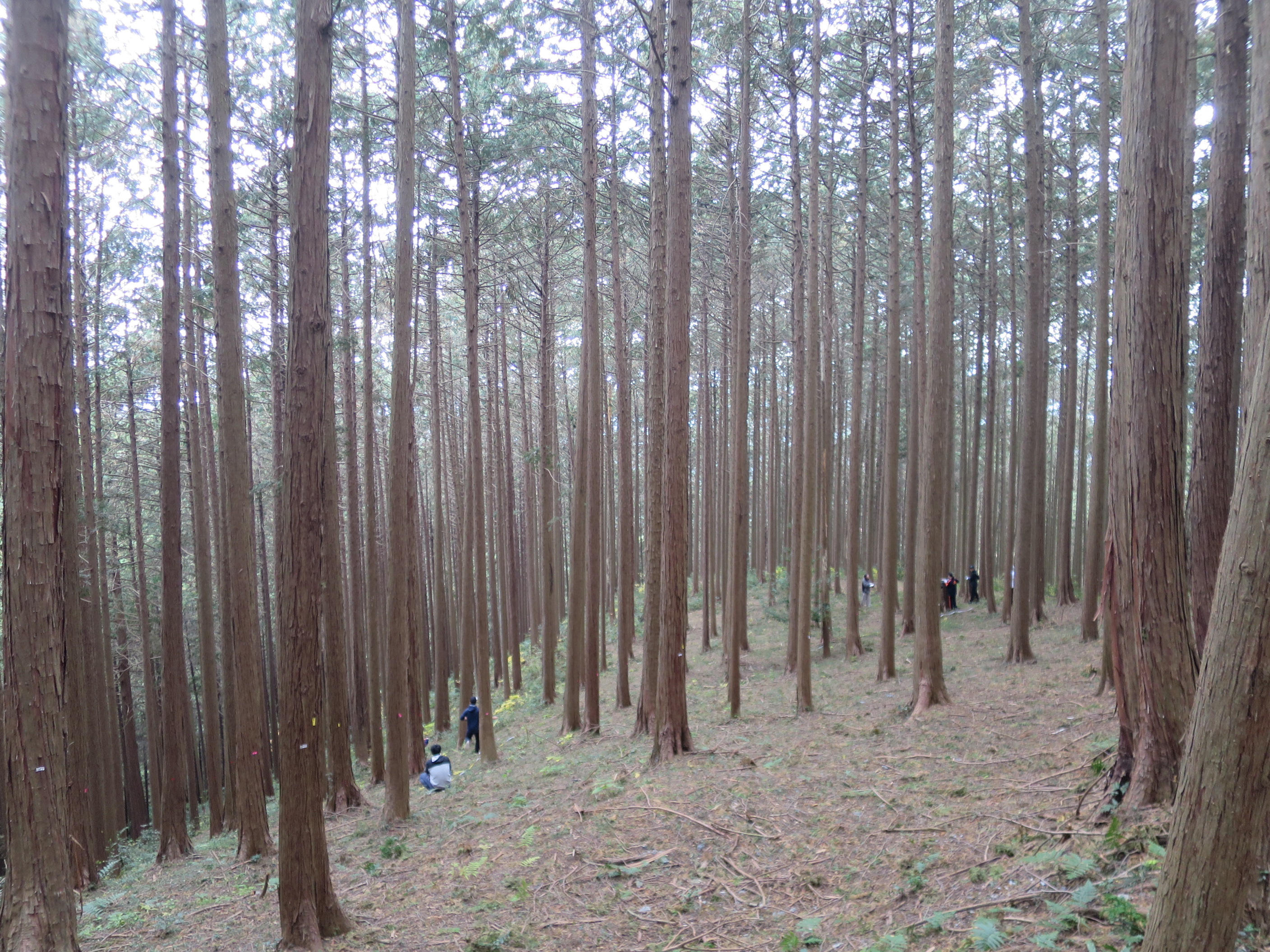
The trees were planted in 1940, so 80 years have passed since then. This is one of the most well-maintained "beautiful forests" in the area. -
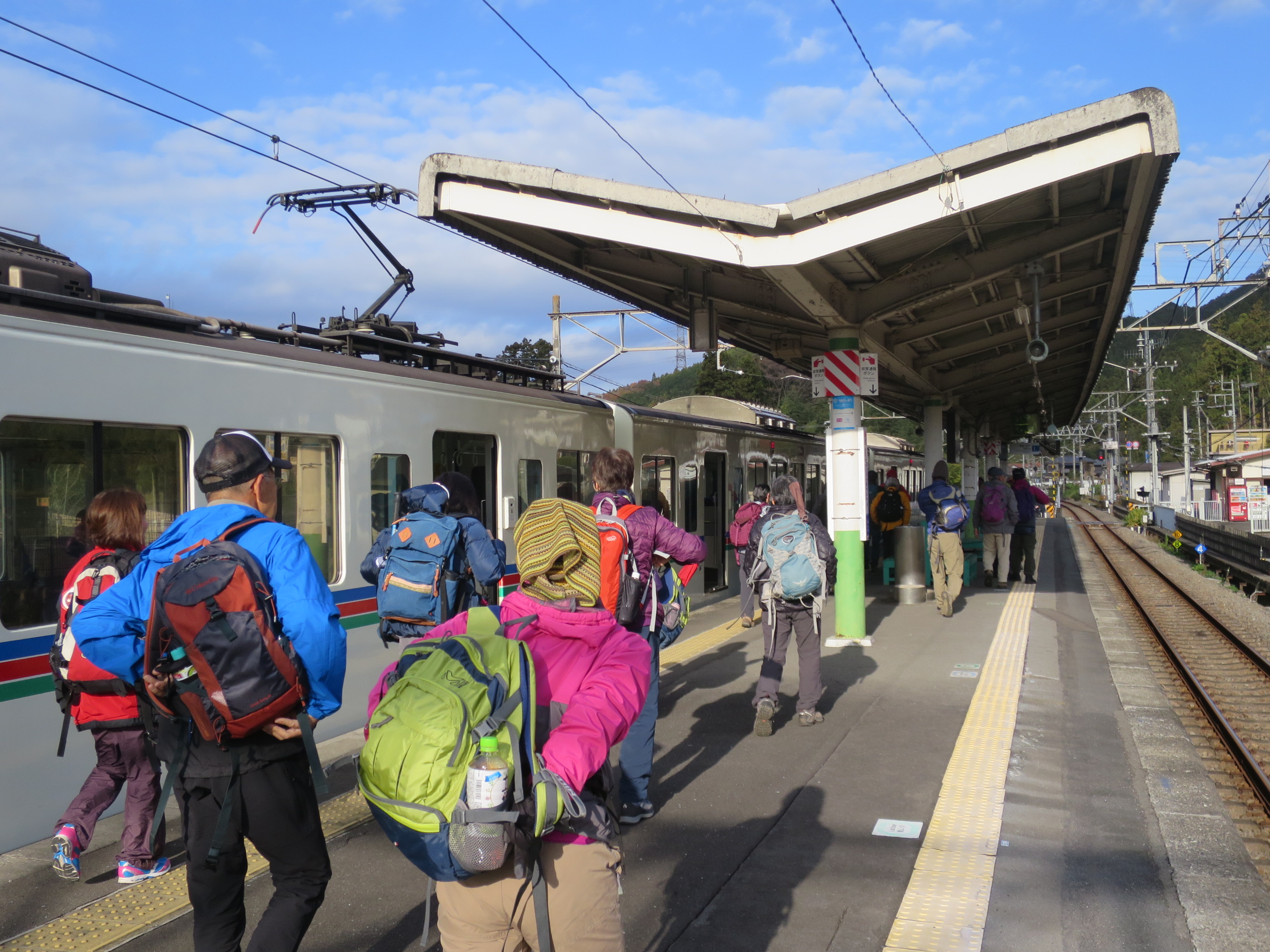
The school forest, where zelkova trees are planted, is about 40 minutes from Musashi-Yokote Station on the Seibu Chichibu Line.
Another legacy of the tradition of protecting and creating greenery is the "School Forest," which was planted in 1940, just before the start of World War II. The cypress trees in this three-hectare plantation were planted in 1940 and are now over 70 years old. The school forest is divided into several sections, including a section where additional trees were planted in 1960 and a section of broadleaf trees such as sawtooth oaks planted in 1993.
The "Musashi Environmental Fieldwork" program involves visiting the school forest on an autumn day, connecting the greenery of Musashi University campus with the cypress trees in the school forest, reminding students of the history of Musashi Gakuen and helping them realize one of the meanings of studying at Musashi.
Here are some excerpts from the "School Forest Thinning Experience" participant reports. All participant report excerpts are posted on a separate school forest page, so please take a look.
Here are some excerpts from the "School Forest Thinning Experience" participant reports. All participant report excerpts are posted on a separate school forest page, so please take a look.
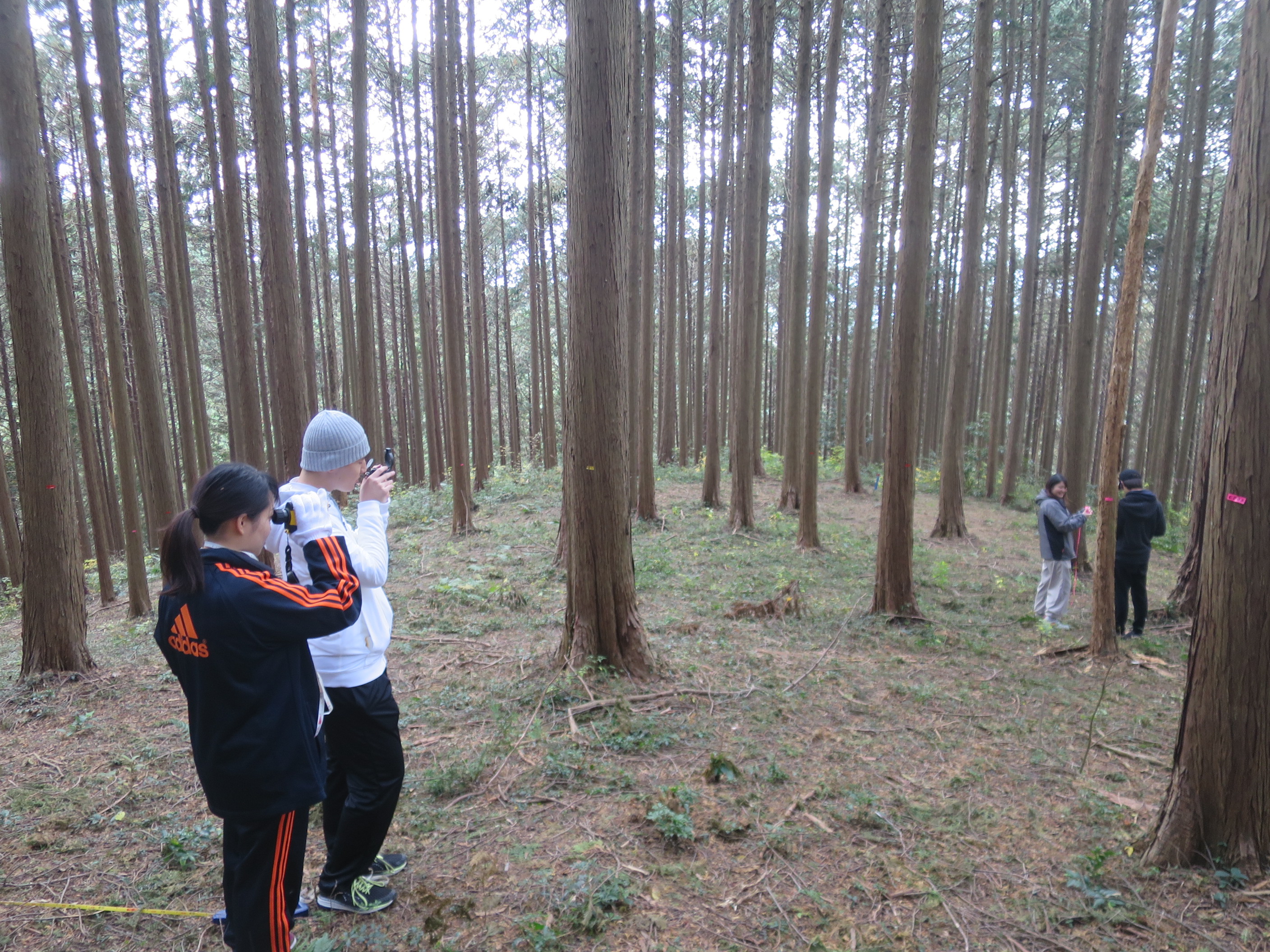
■Excerpts from School Forest Participation Report
This school forest thinning experience was a valuable first experience for me, and I was able to spend a very meaningful day. The school forest was more beautiful than other forests and much larger than I had imagined. I realized that the school forest exists today because of the continued care and nurturing of the forest and the protection of Musashi Gakuen. I had never been interested in forestry before, but through this experience I realized that forestry is very important and must be passed down in the future.
I was very interested to hear that a small shrine I came across along the way was a marker that divided the mountain path into the "mountain" and "village" sections. I was also surprised to hear that a large stone monument I came across on the way back had been brought there by a human.
After the thinning experience, I started to pay more attention to each individual tree. This is because I was able to feel nature on my skin. I felt a strong desire to let more people know the value of nature and to protect it.
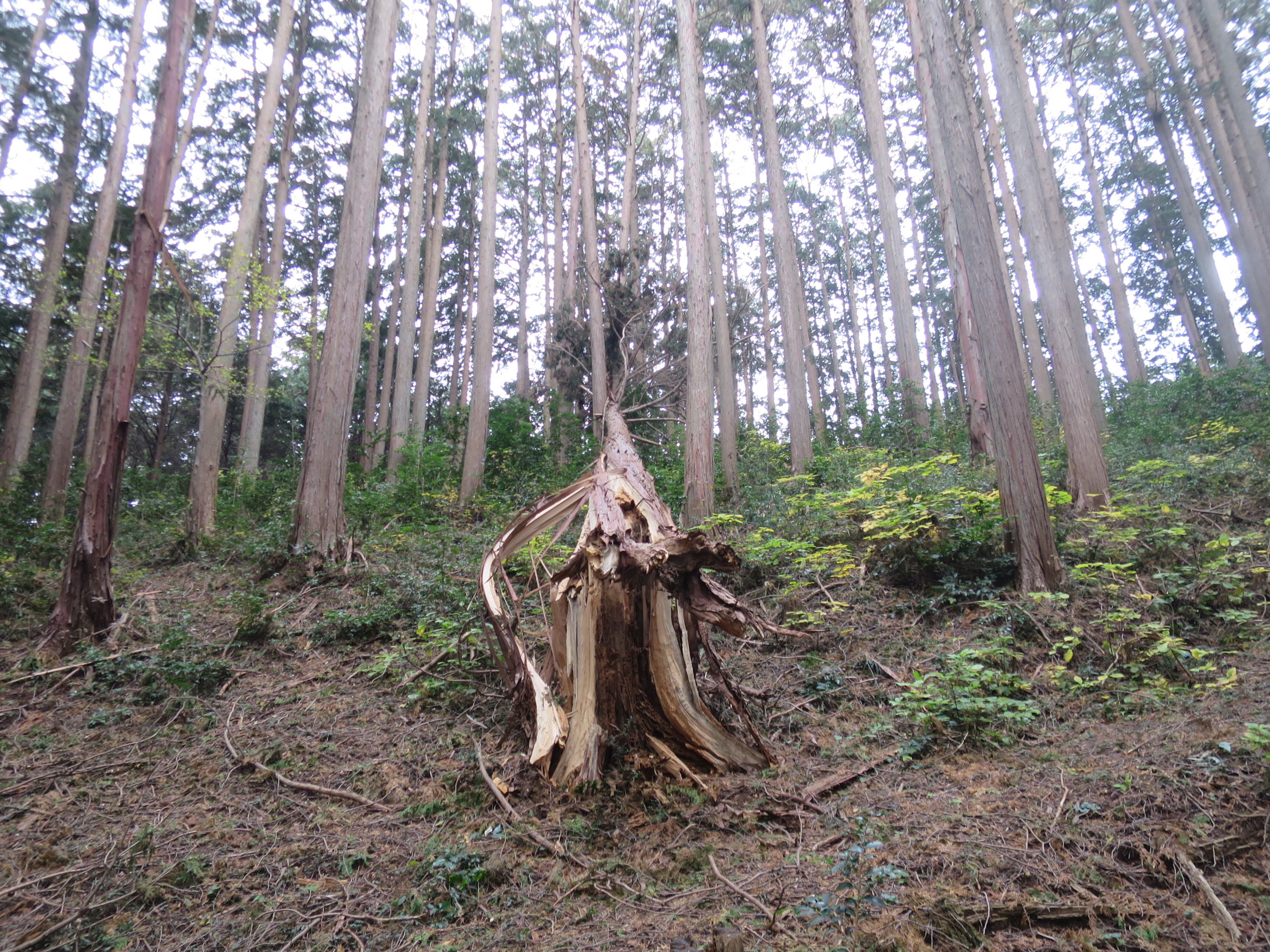
■Excerpts from School Forest Participation Report
On October 6th, I went to the school forest at Musashi Yokote Station as part of the Musashi Environmental Fieldwork class. The climb was on a relatively flat path, but it was still a bit sweaty. On the way up the mountain, I heard about the history of how the forest was created, and also about the value of trees in the Showa era. I learned that times have changed and the value of trees has dropped significantly since before, and that trees quickly lose value if they are not cared for.
After climbing to the top of the mountain, we split into four groups and started our work. My group measured the area. Although we were confused by the tools we were using for the first time, we worked together as a group to complete the task. After lunch, we cut down a tree. I couldn't help but cheer when I saw a tree fall in front of me for the first time in my life.
I learned that the number of people working in the tertiary industry has increased, and the number of people working in primary industries such as forestry has become few and far between. I felt that it is becoming difficult to make a living working only in the primary industry in today's Japanese society. I don't think it's bad to seek a convenient life, but I want to remember to cherish greenery.
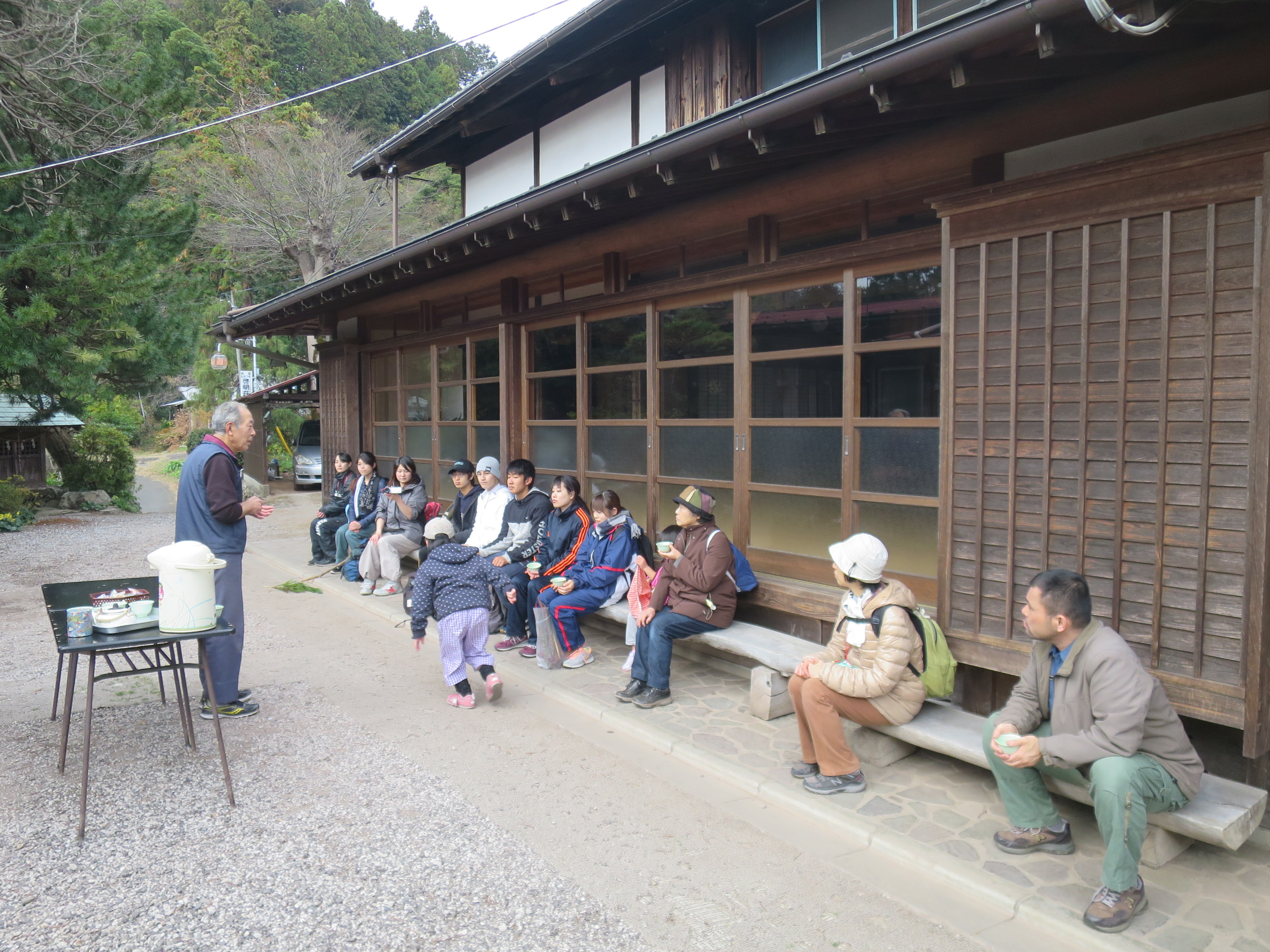
■Excerpts from School Forest Participation Report
I participated in the forest experience as if it were a hike, but the actual path was very steep and it felt more like a full-scale mountain climb. However, it felt very fresh to me, who usually walks only on flat roads.
Along the way, I learned and experienced many things for the first time, including what I saw and heard from the teacher and the thinning work. I had never really understood the difference between cedar and cypress before, but this forest experience allowed me to gain the knowledge to distinguish between them.
Until now, I have never had any interest in mountains and have rather avoided them, but through this experience I was able to reaffirm the importance of mountains and understand the seriousness of the current forestry industry.
I think that few Musashi students know about the existence of this school forest. I didn't know about it either until I participated in this forest experience. That's why I want to tell my classmates about the existence of this school forest, and also spread the word about the fact that this forest was created with the hope of peace, as well as the current state of forestry.