
 3S
3S


A guide to learning Italian
- Italian speaking areas
- Why Learn Italian?
- What is Italian?
- How to read the alphabet
- everyday expression
- Dictionaries and reference books
- Examination
Italian speaking areas
Italian, which is also an official language of the EU, is officially spoken in Italy (with a population of 57 million, about half that of Japan) and in southern Switzerland (the Ticino region, where cities such as Locarno and Lugano are located). It is also one of the official languages favored by intellectuals in Somalia, a former colony in Africa. However, the area in which Italian is actually spoken is actually much wider. This is because many Italians have a history of immigrating to various parts of the world. For example, it is said that the proportion of Italians among the population of the United States, Argentina, and Australia is quite high.
It seems that the language and cultural traditions of their home country have been passed down not only to the first generation who first settled in these areas, but also to their second and third generation descendants. For this reason, in some of the above countries, there are broadcasts, newspapers, and publications in Italian. Furthermore, as time went on, many Italians immigrated to various parts of Europe, including Germany and Northern Europe, so Italian is often spoken in those areas as well. Furthermore, there are many junior high schools, high schools, vocational schools, and universities in Europe where Italian is offered as a second or third foreign language. Looking at this, we can see that there are surprisingly many more areas where Italian can be spoken than commonly believed.
It seems that the language and cultural traditions of their home country have been passed down not only to the first generation who first settled in these areas, but also to their second and third generation descendants. For this reason, in some of the above countries, there are broadcasts, newspapers, and publications in Italian. Furthermore, as time went on, many Italians immigrated to various parts of Europe, including Germany and Northern Europe, so Italian is often spoken in those areas as well. Furthermore, there are many junior high schools, high schools, vocational schools, and universities in Europe where Italian is offered as a second or third foreign language. Looking at this, we can see that there are surprisingly many more areas where Italian can be spoken than commonly believed.
Why Learn Italian?
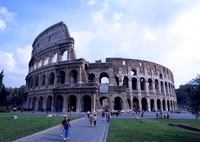
It was long ago, at the end of the 13th century, that the Venetian merchant Marco Polo described Japan as "Zipangu, the Land of Gold" in his book "The Travels of Marco Polo." In the second half of the 16th century, Italian missionaries including Valignano visited Japan. Then, between 1582 and 1590, the feudal lords of Kyushu, who had converted to Christianity under their influence, dispatched the Tensho Embassy to Rome and had an audience with Pope Gregory XIII. Later, in the Meiji period, Italians who were particularly active in the arts, came to Ragusa and other areas as so-called "hired foreigners." As such, Japan and Italy have a deep historical relationship.
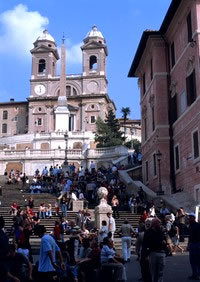
This tradition continues to this day, and Japan has been influenced by Italy in many areas, including music, film, fashion, art, and architecture. For example, many Italian words have been introduced into the world of music as foreign words. These include opera, tempo, and concerto, and most tempo marks are Italian, such as allegro, andante, and adagio. Needless to say, many fashion brand names are named after Italian designers and Italian boutiques.
Recently, Italian cuisine has become more popular, and there are more words related to food and ingredients. Words like pasta, gelato, cappuccino, and espresso seem to have become well established. In sports, calcio, meaning soccer, totocalcio, which was also introduced in Japan, and serie A, the highest level A league, are well known. The name of Ferrari, the car manufacturer that is active in F1, is also well known.
In the past, motivations for learning Italian were limited to music, art, architecture, etc., but in recent times, they have expanded to a wide range of fields, including cooking, sports, fashion, crafts, and tourism. Italy, home to 80% of the world's heritage sites, has delicious food, and cheerful people, has always been a popular travel destination, and more and more people have started studying the language after traveling there. Business exchanges between Italy, a source of excellent design and fashion, and Japan are also increasing. People who are fluent in Italian are also in demand in fields such as food, the travel industry, and cultural exchange.
In the past, motivations for learning Italian were limited to music, art, architecture, etc., but in recent times, they have expanded to a wide range of fields, including cooking, sports, fashion, crafts, and tourism. Italy, home to 80% of the world's heritage sites, has delicious food, and cheerful people, has always been a popular travel destination, and more and more people have started studying the language after traveling there. Business exchanges between Italy, a source of excellent design and fashion, and Japan are also increasing. People who are fluent in Italian are also in demand in fields such as food, the travel industry, and cultural exchange.
What is Italian?
Italian is often said to be a Latin language, but more accurately, it is one of the Romance languages. It is a language that was born from Latin, the language of ancient Rome, and other languages in the same family include French, Spanish, Portuguese, and Romanian. Among them, it is most closely related to Spanish. Let me give you some examples.
|
Italy
|
libro
|
Casa
|
fiore
|
Rosso
|
buono
|
|
west
|
libro
|
Casa
|
fior
|
rojo
|
bueno
|
|
day
|
Books
|
house
|
flower
|
red
|
good
|
"Book" and "house" are spelled exactly the same and are pronounced almost the same. "Flower" is spelled a little differently, but is very similar. Not only nouns, but the last two adjective examples are also very similar in both spelling and sound. Not only at the word level, but even when they are more complete phrases, the difference between the two is not that great.
|
Italy
|
Un caffè, per favore!
|
Come si chiama?
|
Mi chiamo Yoko.
|
|
west
|
Un café, por favor!
|
¿Cómo se llama?
|
Me llamo Yoko.
|
|
day
|
Coffee please!
|
What's your name?
|
My name is Yoko.
|
As you can see, the article un, which corresponds to the English a, is the same. Also, the interrogative word at the beginning of the second example, which means "how," is very similar to come and cómo. The word order is also the same in all the examples above.
Not only Spanish, but the Romance languages listed above all have similar grammatical structures. Compared to English, the grammar is more complex. This is because nouns, articles, and adjectives are differentiated between masculine and feminine, there are many verb tenses, and person conjugations are complex. This is a general characteristic of Western European languages, including Germanic languages such as German. On the other hand, Italian pronunciation is familiar to Japanese people and relatively easy. This is because the phonological systems of both languages are centered around similar vowels, which is a great advantage when learning. Now, let's look at how to read the Italian alphabet.
Not only Spanish, but the Romance languages listed above all have similar grammatical structures. Compared to English, the grammar is more complex. This is because nouns, articles, and adjectives are differentiated between masculine and feminine, there are many verb tenses, and person conjugations are complex. This is a general characteristic of Western European languages, including Germanic languages such as German. On the other hand, Italian pronunciation is familiar to Japanese people and relatively easy. This is because the phonological systems of both languages are centered around similar vowels, which is a great advantage when learning. Now, let's look at how to read the Italian alphabet.
How to read the alphabet
|
A |
B |
C |
D |
E* |
F |
G |
H |
I |
|
L |
M |
N |
O |
P |
Q |
R |
S |
T |
|
U |
V |
Z |
|
J* |
K* |
W* |
X* |
Y* |
The 21 characters above are the ones we normally use (fewer than English!). The five characters marked with * have a slightly different pronunciation, but are only used in some proper nouns and archaic words.
everyday expression
Next, let's introduce a few everyday expressions such as greetings. For pronunciation, you can basically read it in romanized characters, but there are some exceptions.
|
Buongiorno.
|
(Buongiorno)
|
"Good morning," "Hello"
|
|
Buonasera.
|
(Buona Sera)
|
"Good evening"
|
|
Ciao.
|
(Ciao)
|
"Hey," "See you," "Bye"
|
|
Grazie.
|
(Grazie)
|
"thank you"
|
|
Arrivederci.
|
(Arrivederci)
|
"Goodbye"
|
Dictionaries and reference books
dictionary
- "Italy-Japanese Dictionary, 2nd Edition" edited by Ikeda et al. (Shogakukan)
- This classic dictionary comes with English translations for important terms and has many usage examples, making it easy for beginners to use.
- "Japanese-Italian-Chinese Dictionary" compiled by Nishikawa (Shogakukan) A sister edition of the Italian-Japanese dictionary above.
Recently, an "electronic dictionary" containing both of the above dictionaries has been released.
In addition to these, several so-called compact dictionaries have also been published.
In addition to these, several so-called compact dictionaries have also been published.
Reference books
The following books are a good collection of books to help you learn about Italy:
- "55 Chapters to Know Italy" by Yoshikazu Murakami (Akashi Shoten)
Examination
Practical Italian Language Proficiency Test Levels 1-5 (Italian Language Proficiency Test Association)
In addition, there is a qualification test (level 4 to 1) that the Italian government is conducting around the world, but the content of this test is quite difficult.Italian Cultural InstituteYou can take the exam at.
In addition, there is a qualification test (level 4 to 1) that the Italian government is conducting around the world, but the content of this test is quite difficult.Italian Cultural InstituteYou can take the exam at.