
 3S
3S


Spanish Learning Guide
- Spanish speaking areas
- Why Learn Spanish?
- Features of Spanish
- Pronunciation and spelling
- How to read the alphabet
- Grammar Basics
- everyday expression
- Dictionaries and encyclopedias
- Spain on the Internet
In the fall of 2004, as the heated battle drew to a close in the final days of the presidential election, both candidates Bush and Kerry gave passionate speeches in Spanish just before the voting day, and their pronunciation was one step closer to simple and clear, rather than the vague vowels typical of Americans. There was evidence of their efforts to appeal directly to the Hispanic people, the largest minority group that holds the key to victory or defeat, in Spanish. President Obama, who was re-elected in 2012, speaks more natural and fluent Spanish.
What kind of language is Spanish, which has now become a required subject for the President of the United States? Let's take a peek into the world of Spanish.
Spanish speaking areas
Spanish is one of the official languages of the United Nations along with English, French, Russian, Chinese, and Arabic. It is also the second most widely spoken language in the world after Chinese, being spoken as an official language by 420 million people, or about 6% of the total population, on about 9% of the total land area of the Earth.
There are 20 countries where Spanish is the official language, including Spain, 18 Latin American countries, and Equatorial Guinea in Africa, with approximately 420 million people using it as their native language. However, in Spain itself, the number of people who speak Spanish is approximately 43 million.
There are also many Spanish speakers in areas where it is not an official language, such as Germany, Belgium, Switzerland and the Philippines. The largest group of Spanish speakers are the Hispanics in the United States, who number approximately 54 million.
Latin America: The countries of North and South America use Spanish because they were colonies of Spain for over 300 years, from 1492 when Columbus arrived on this continent until the first half of the 19th century. Brazil speaks Portuguese because when Spain and Portugal, the two great powers of the Age of Discovery, signed a treaty in 1494 to divide the world lengthwise in half, the dividing line passed just west of Brazil, and Brazil became a Portuguese territory.
Hispanics: 54 million Hispanics make up 16.3% of the total population of the United States. They are now the largest minority, surpassing African Americans, and are expected to make up 24% of the total population by 2050. Among them, Mexicans, known as Chicanos, are the largest, and they live widely in the southwestern United States, including California, Texas, and Arizona, which claim their legendary ancestral land, the homeland of the Aztecs, that was taken from them in an illegal war. There are also many Cuban residents in Florida. Of course, New York is home to many native Spanish speakers, including Latinos from various Latin American countries and Puerto Ricans, famous for "West Side Story."
Although Spanish is used over such a wide area, there are only a few changes in intonation and regional vocabulary, and the language remains uniform, making mutual understanding a breeze.
There are also many Spanish speakers in areas where it is not an official language, such as Germany, Belgium, Switzerland and the Philippines. The largest group of Spanish speakers are the Hispanics in the United States, who number approximately 54 million.
Latin America: The countries of North and South America use Spanish because they were colonies of Spain for over 300 years, from 1492 when Columbus arrived on this continent until the first half of the 19th century. Brazil speaks Portuguese because when Spain and Portugal, the two great powers of the Age of Discovery, signed a treaty in 1494 to divide the world lengthwise in half, the dividing line passed just west of Brazil, and Brazil became a Portuguese territory.
Hispanics: 54 million Hispanics make up 16.3% of the total population of the United States. They are now the largest minority, surpassing African Americans, and are expected to make up 24% of the total population by 2050. Among them, Mexicans, known as Chicanos, are the largest, and they live widely in the southwestern United States, including California, Texas, and Arizona, which claim their legendary ancestral land, the homeland of the Aztecs, that was taken from them in an illegal war. There are also many Cuban residents in Florida. Of course, New York is home to many native Spanish speakers, including Latinos from various Latin American countries and Puerto Ricans, famous for "West Side Story."
Although Spanish is used over such a wide area, there are only a few changes in intonation and regional vocabulary, and the language remains uniform, making mutual understanding a breeze.
Why Learn Spanish?
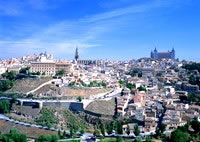
Spain, along with Portugal, was the first European country with which Japan had contact in the 16th century, and introduced the so-called Nanban culture to the country. Many Japanese words have Spanish origins, such as bread, tobacco, castella, ojiya, and canary.
Furthermore, while Spain used to be known for bullfighting and flamenco, after the 1992 Barcelona Olympics it began to attract attention as a country that produced great artists such as Gaudi, Picasso, Dali, and Miro, and going back further, Goya, Velázquez, and El Greco, as well as world-famous figures such as Don Juan, Don Quixote, and Carmen.
Furthermore, while Spain used to be known for bullfighting and flamenco, after the 1992 Barcelona Olympics it began to attract attention as a country that produced great artists such as Gaudi, Picasso, Dali, and Miro, and going back further, Goya, Velázquez, and El Greco, as well as world-famous figures such as Don Juan, Don Quixote, and Carmen.
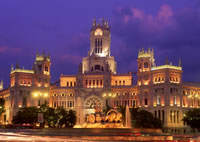
Located on the western edge of Europe, next to Africa to the south, it has been a crossroads for many different ethnic groups and civilizations, experiencing both the coexistence and persecution of different cultures. It has also had deep ties with the American world since the Age of Discovery. Of course, we can't forget about soccer, including Real Madrid. Learning Spanish allows us to soar into a wider world that transcends time and space. Along with the enjoyment of sports and eating and drinking at a bar!
Features of Spanish
Origin and History of the Spanish Language
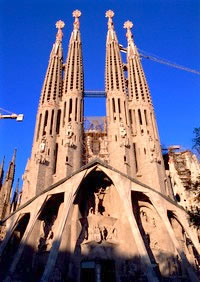
Spanish is the official language of all of Spain, but in fact there are other official languages in each region of Spain, such as Catalan, Galician, and Basque. Spanish is also known as Castilian, and is widely spoken in the central part of the Iberian Peninsula, from the Cantabrian coast in the north to Andalusia on the Mediterranean coast in the south.
Spain was once a province of the Roman Empire, where Latin was used. Spanish is one of the Romance languages that descend from Latin, and is sister to Italian, French, Portuguese, and Romanian. Because it was located in a remote area far from the capital, Rome, the language has a slightly old-fashioned flavor, with elements of Latin grammar remaining largely intact.
Besides Latin, Greek and Germanic languages also came into the language, but the most important influence was Arabic. Spain was under Muslim rule for 800 years, from the beginning of the 8th century to the end of the 15th century. This is why Spanish culture has a unique color, and it is said that there are more than 4,000 words of Arabic origin in the language.
Spain was once a province of the Roman Empire, where Latin was used. Spanish is one of the Romance languages that descend from Latin, and is sister to Italian, French, Portuguese, and Romanian. Because it was located in a remote area far from the capital, Rome, the language has a slightly old-fashioned flavor, with elements of Latin grammar remaining largely intact.
Besides Latin, Greek and Germanic languages also came into the language, but the most important influence was Arabic. Spain was under Muslim rule for 800 years, from the beginning of the 8th century to the end of the 15th century. This is why Spanish culture has a unique color, and it is said that there are more than 4,000 words of Arabic origin in the language.
Pronunciation and spelling
Spanish dictionaries usually do not have phonetic symbols. Or the pronunciation is shown in katakana. This is because Spanish has a nearly one-to-one correspondence between spelling and pronunciation, and the pronunciation is almost the same as that of the Roman alphabet. There are also five vowels, aiueo, which are very similar to Japanese, although there are subtle differences. For example,
|
Estudiante
|
(Estudiante)
|
"Student"
|
|
Universidad
|
(Universidad
|
"University"
|
|
Historia
|
(Istria)
|
"history"
|
|
Arte
|
(Arte)
|
"art"
|
|
Spanish
|
(Espanyol)
|
"Spanish language and People"
|
|
Japanese
|
(Japones)
|
"Japanese Language and People"
|
|
norteamericano
|
(Norte Americano)
|
"American"
|
The last part, "american," is pronounced the same as "nautay americano" in America. Japanese people are much better at pronouncing Spanish than Americans!
How to read the alphabet
"Spanish is the language to speak to God, Italian to speak to women, French to speak to men," said Emperor Carlos V of the Spanish Empire at the height of its power in the 16th century. By learning a few things that require careful attention to the pronunciation itself, such as rolling the tongue, and some rules of spelling, you can enter the world of clear and concise Spanish sounds.
|
A
[Ah] |
B
[Bae] |
C
[[Say] |
D
[Day] |
E
[A] |
F
[Effe] |
G
[Hey] |
H
[Aceh] |
I
[E] |
|
J
[Hota] |
K
[car] |
L
[Ele] |
M
[Eme] |
N
[Energy] |
N
[Enye] |
O
[Oh] |
P
[P.E. |
Q
[Kuu] |
|
R
[Ele] |
S
[Fake] |
T
[Tee |
U
[Woo] |
V
[Ube] |
W
[Ubedobre] |
X
[extract] |
Y
[Igliega] |
Z
[Seta] |
Grammar Basics
(1) By looking at the verbs, you can see who did what and when.
I am a student.
We are students.
The tango was born in Buenos Aires.
Where were you born?
Thus, verbs change depending on tense, person and number.
We are students.
The tango was born in Buenos Aires.
Where were you born?
Thus, verbs change depending on tense, person and number.
(2) There is a grammatical distinction between masculine and feminine.
el hombre alto tall man
la casa blanca the white house
Not only nouns, but also adjectives and articles change accordingly.
(3) There is a distinction between singular and plural.la casa blanca the white house
Not only nouns, but also adjectives and articles change accordingly.
My father is a teacher. My father is a teacher.
My parents are very busy. My parents are very busy.
My parents are very busy. My parents are very busy.
As in (2), we can see that the numbers match.
Spanish has a strong and regular grammatical structure, so you only need to learn a relatively small number of basic points to be able to use it in a wide range of situations.
Spanish has a strong and regular grammatical structure, so you only need to learn a relatively small number of basic points to be able to use it in a wide range of situations.
everyday expression
|
Buenos dias.
|
(Buenos Dias)
|
"good morning"
|
|
Buenas tardes.
|
(Buenas Tardes)
|
"Hello"
|
|
Buenas noches.
|
(Buenas Noches)
|
"Good evening. Good night."
|
|
Hola.
|
(Ola)
|
"Hi"
|
|
¿Qué tal?
|
(Ketal)
|
"how are you?"
|
|
Muchas gracias.
|
(Muchas gracias)
|
"Thank you very much."
|
|
Adiós.
|
(Adios)
|
"Goodbye"
|
|
Hasta mañana.
|
(Asta Mañana)
|
"See you tomorrow."
|
|
Un café, por favor!
|
(Un Cafe, Pol Fabor)
|
"A cup of coffee please."
|
Dictionaries and encyclopedias
Spanish-Japanese Dictionary
- "Modern Spanish Dictionary" (Hakusuisha)
- It is 45,000 words long and is very detailed and thorough.
- "Progressive Spanish Dictionary" (Shogakukan)
- Contains 25,000 words, phonetic notation, and Japanese-Spanish translation.
- "Puerta's New Spanish Dictionary" (Kenkyusha)
- Includes new expressions from Spain and America.
- "Sei-Japanese Dictionary" (Shogakukan)
- It has 67,000 words and plenty of examples, making it a fun read.
- "Passport Beginner's Spanish Dictionary" (Hakusuisha)
- 9000 words, for beginners.
Japanese-Spanish dictionary
- "Japanese-Spanish Dictionary" (Hakusuisha)
- 35,000 headwords
- "Crown Japanese-Spanish Dictionary" (Sanseido)
- 30,000 headwords
Electronic dictionary
- "SII (Modern Spanish Dictionary/Japanese-Spanish Dictionary/Spanish-English/English-Spanish Dictionary)" (Seiko Instruments)
- "EX-word (Modern Spanish Dictionary/Japanese-Spanish Dictionary)" (Casio)
Reference book
- "Revised Introduction to Spanish" by Ryohei Uritani (Hakusuisha Publishing)
- "Modern Spanish Course" by Tatsuo Okada (Geirin Shobo)
- "Spain Handbook" (Sanseido)