3S
3S


Basic seminar steps
Seminars and small-group classes start from the first year. Not only do students take on a variety of research themes and acquire a wide range of knowledge, but this experience also becomes the basis for thinking when confronted with unknown problems, generating dialogue that leads to solutions and new ideas.

Seminar flow
1st year
Acquire the basics for studying in seminars
Through seminar activities, students will acquire the techniques necessary for university learning, from how to read literature, to how to find resources in newspapers, magazines and the Internet, to how to write reports, and how to give presentations and participate in discussions.
Second Year
The start of research using more practical methods
Students begin preparing to enter society by working on specialized research that matches their interests. They engage in practical activities such as reading and researching literature, fieldwork, and practical training. Seminar camps are also held, providing opportunities to deepen interactions.
Third Year
Opportunities to deepen specialized understanding and present results
Students will set a theme individually or in a group, and deepen their research through repeated presentations and discussions. There will also be opportunities to present the results of their research both on and off campus, and presenting on a large stage will contribute to individual growth.
Fourth Year
The culmination of four years of study: completing a graduation thesis and graduation project
Students will develop their third-year reports and research results and complete their graduation thesis and graduation project, which will be the culmination of their university life. They will express the results of their learning by bringing together the know-how they have acquired over four years of seminars, such as overall structure, logical development, and effective communication methods.
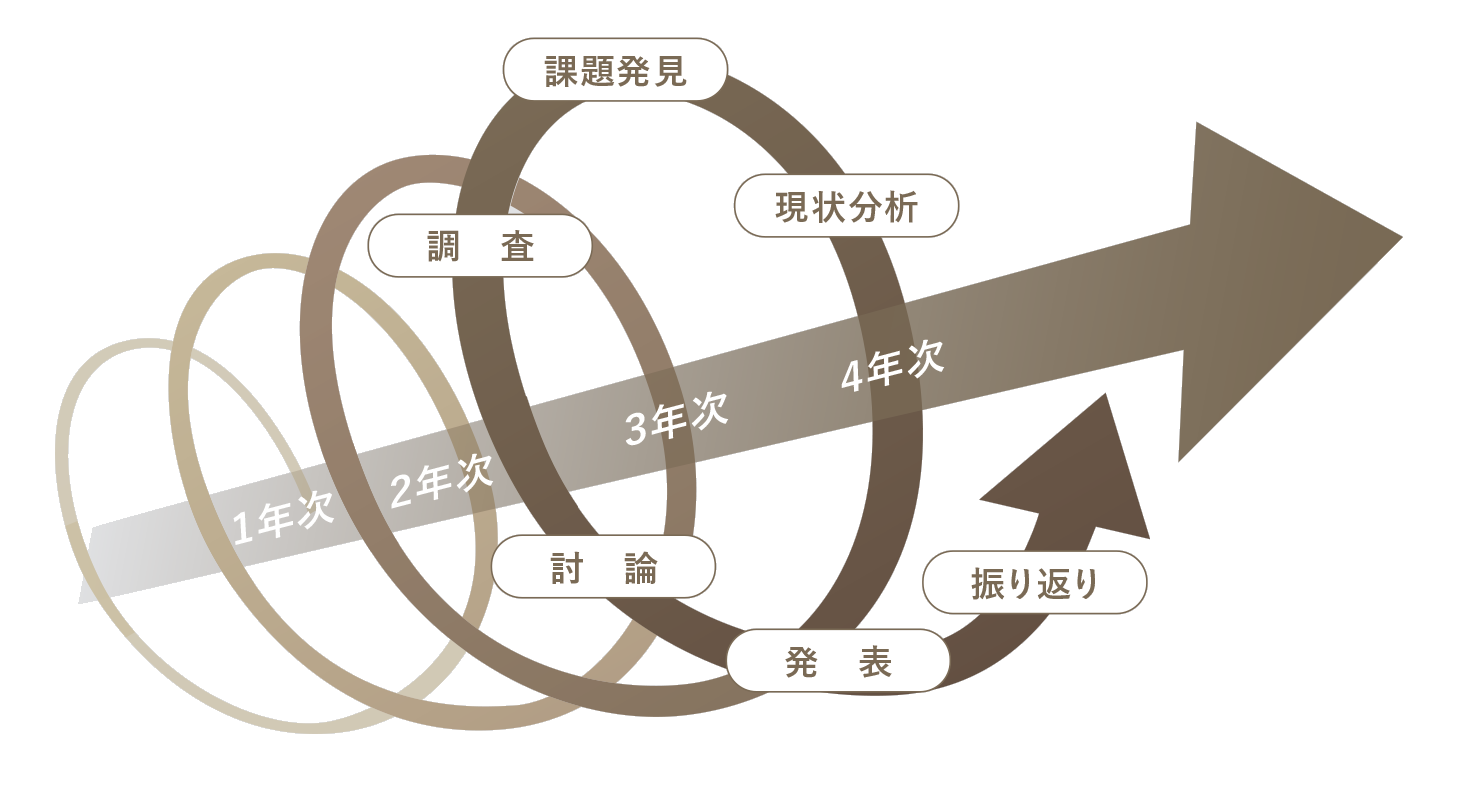
Musashi University's Seminar are a spiral of knowledge
In the seminar, from the first year, students repeat the cycle of ① current situation analysis, ② problem discovery, ③ research, ④ discussion, ⑤ presentation, and ⑥ review. By experiencing this cycle many times over the course of four years, a spiral is formed, which becomes the foundation for cultivating new ideas.