
 3S
3S


French learning guide
- French speaking areas
- Why learn French?
- What is French?
- How to read the alphabet
- everyday expression
- Famous people who were active in France
- Study abroad
- Dictionaries and encyclopedias
- Major examinations and qualifications
French speaking areas
French is an international language. It is also an official language of the United Nations, the European Union, and the Organization of African Unity. It is estimated that there are more than 62 million speakers in Europe, and 160 million speakers in other regions (80 million of which are native speakers). Incidentally, there are 102 countries in the world where English is an official language, 54 countries where French is an official language, and 38 countries where Spanish is an official language (based on data from Laval University, Quebec, Canada, 2013).
Within Europe, it is spoken not only in France, but also in Belgium (Wallonia), western Switzerland, Luxembourg, Monaco, the Aosta Valley in Italy, the Channel Islands, etc. Outside Europe, it is an official language in French Polynesia and New Caledonia in the Pacific, French Guiana in South America, and Haiti in the Caribbean.
It is the only official language in the Canadian province of Quebec, as well as in Madagascar and Seychelles in the Indian Ocean, former French colonies in Africa (Senegal, Cameroon, etc.), and former Belgian colonies (Democratic Republic of the Congo, etc.).
Within Europe, it is spoken not only in France, but also in Belgium (Wallonia), western Switzerland, Luxembourg, Monaco, the Aosta Valley in Italy, the Channel Islands, etc. Outside Europe, it is an official language in French Polynesia and New Caledonia in the Pacific, French Guiana in South America, and Haiti in the Caribbean.
It is the only official language in the Canadian province of Quebec, as well as in Madagascar and Seychelles in the Indian Ocean, former French colonies in Africa (Senegal, Cameroon, etc.), and former Belgian colonies (Democratic Republic of the Congo, etc.).
Why learn French?
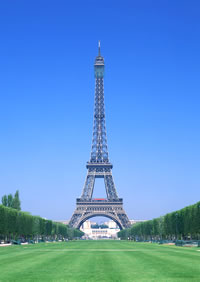
There are many benefits to learning French. Above all, it will broaden the world you will live in in the future. Since French is the official language in many countries, if you can speak French, the areas in which you can freely move will expand all over the world.
However, the core significance of learning a language is that it allows you to communicate with the people who speak it or have spoken it in the past. In that sense, French has a rich breadth of potential, from its past heritage to its current activities and prospects for the future. As can be seen in its fashion and cuisine, France values the enjoyment of life. Its artworks, including fine arts and literature, are also well known.
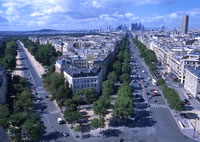
However, in terms of the activities and people's lives that lie behind these differences, the reality is that we still don't know each other very well. From now on, we will no longer just learn something from other countries, but will work together to tackle common challenges. And the basis for getting to know each other is, of course, language. Learning a foreign language does not simply increase knowledge, it also helps us understand that the environment and living conditions that we take for granted are not necessarily natural for everyone.
Through such surprising experiences, you can develop flexible thinking and the imagination to consider the thoughts and feelings of others. Communication skills are not just about having a lot of knowledge, but also about the mental attitude of trying to understand others.
There is no perfect word. Don't be afraid to make mistakes, and use what you have learned to expand your world, both in reality and in your heart.
There is no perfect word. Don't be afraid to make mistakes, and use what you have learned to expand your world, both in reality and in your heart.
What is French?
French is known for being beautiful, and the secret to this lies in its fluent pronunciation.
Once you understand the divisions in your reading, such as pronouns, subjects, and verbs in one breath, and articles, nouns, and adjectives in one breath, you can read slowly and make your pronunciation sound beautiful. Also, unlike English, French puts the stress on the end of all words. Try pronouncing the final vowel of each word a little longer.
French has a lot in common with English. There are many common constructions such as the "so that" construction and the "too ~ to" construction, and the grammar can be inferred to a certain extent from English.
There are also many similar vocabulary words, such as the names of the months: avril, juin, octobre, décembre. Can you guess which months they are?
On the other hand, there are words that are similar but not the same, so you need to be careful. They are called "faux friends" (faux amis). For example, in English, lecture means "lecture" or"lecture", but the original French word lecture means "reading" and corresponds to the English word "reading". In French, "lecture" is called conférence and "lecture" is called cours. Another word, the French word histoire, means "history" as well as "story" in English. The secret to improving your English is to find it interesting and pay attention to the differences between words that are similar like this.
Once you understand the divisions in your reading, such as pronouns, subjects, and verbs in one breath, and articles, nouns, and adjectives in one breath, you can read slowly and make your pronunciation sound beautiful. Also, unlike English, French puts the stress on the end of all words. Try pronouncing the final vowel of each word a little longer.
French has a lot in common with English. There are many common constructions such as the "so that" construction and the "too ~ to" construction, and the grammar can be inferred to a certain extent from English.
There are also many similar vocabulary words, such as the names of the months: avril, juin, octobre, décembre. Can you guess which months they are?
On the other hand, there are words that are similar but not the same, so you need to be careful. They are called "faux friends" (faux amis). For example, in English, lecture means "lecture" or"lecture", but the original French word lecture means "reading" and corresponds to the English word "reading". In French, "lecture" is called conférence and "lecture" is called cours. Another word, the French word histoire, means "history" as well as "story" in English. The secret to improving your English is to find it interesting and pay attention to the differences between words that are similar like this.
How to read the alphabet
With the alphabet, there are pronunciations that are the same as in English, pronunciations that are very similar, and pronunciations that are completely different. Try and find them!
|
A |
B |
C |
D |
E* |
F |
G |
H |
I |
|
J |
K |
L |
M |
N |
O |
P |
Q |
R |
|
S |
T |
U |
V |
W |
X |
Y |
Z |
|
*The sound between "u" and "e" is a bit like the English vowel consonant.
everyday expression
|
Bonjour!
|
(BonjooR)
|
"Good morning" "Hello"
|
|
Bonsoir!
|
(BonsoirR)
|
"Good evening"
|
|
What do you mean?
|
(Sava?)
|
"fine?"
|
|
Mercy.
|
(MRC)
|
"thank you"
|
|
Au revoir.
|
(ORVoirR)
|
"Goodbye"
|
Note: The pronunciation of the French r is unique. Once you get the hang of it, it's easy, so please take a class to learn it.
Famous people who were active in France
literature
Molière (playwright, comedy "The Misanthrope"), Perrault (collection of fairy tales such as "Sleeping Beauty"), Hugo ("Les Miserables"), Balzac (series of human comedies such as "Old Goriot"), George Sand (female author dressed as a man, "The Fairy of Love"), Baudelaire ("Flowers of Evil"), Flaubert ("Madame Bovary"), Proust ("In Search of Lost Time"), Saint-Exupéry (author, airline pilot, "The Little Prince"), Camus (Nobel Prize-winning author born in Algeria, "The Stranger"), Kundera (exile from the Czech Republic, "The Unbearable Lightness of Being")
history
Joan of Arc (active in the Hundred Years' War), Mazarin (Italian politician, Louis XIV's chief minister), Louis XIV (Sun King), Marie Antoinette (Austrian Habsburg, executed by guillotine), Napoleon (First Emperor of the French Empire), Charles de Gaulle (20th century politician, named after Paris airport), Césaire (poet and politician from Martinique in the Caribbean, author of "Colonialism")
art
Chopin (Polish composer), Rodin (sculptor, "The Thinker"), Monet (painter, "Water Lilies"), Van Gogh (Dutch painter), Picasso (Spanish painter), Chagall (Belarusian painter), Hergé (Belgian cartoonist, "The Adventures of Tintin" series is a classic that everyone in France has read at least once), Godard (film director, "Pierrot le mad"), Georg Hallensleben (illustrator of the children's book series "Gaspard and Lisa", born in Germany)
thought
Montaigne ("Que sages (What do I know?)"), Descartes ("I think, therefore I am"), Pascal ("Man is a thinking reed", scientist and religious thinker, origin of the unit hectopascal), Rousseau (born in Geneva, Switzerland, author of Discourse on the Origin and Origin of Inequality among Men), Sartre (existentialist literature, Nausea), Levinas (Jewish thinker from Lithuania), Lévi-Strauss (cultural anthropology, Tropics of Sadness), Derrida (Philosopher born in Algeria)
science/technology
Lavoisier (chemist, executed by guillotine during the revolution), Ampere (founder of electromagnetism, origin of the unit ampere), Pasteur (founder of modern bacteriology), Fabre (entomologist), Eiffel (designer of the Eiffel Tower), Madame Curie (born in Poland, Nobel Prize winner for her research on radioactivity)
Sports, fashion, actors, singers, etc.
Brillat-Savarin (The Physiology of Taste), Coubertin (founder of the modern Olympic Games), Diaghilev (founder of the Ballets Russes [Russian ballet company]), Coco Chanel (fashion designer), Juliette Gréco (singer), Yohji Yamamoto (Japanese-born fashion designer), Jean Reno (Moroccan-born actor), Carlos Ghosn (Lebanese-Brazilian, triple citizen including France, president of Renault-Nissan), Alain Prost (F1 driver), Charlotte Gainsbourg (actor), Zinedine Zidane (soccer player), Daft Punk (music group)
Study abroad
Short-term Language study abroad program (language training)
Twice a year (one month during summer and spring vacations, homestay) at the Touraine Institute (Tours).
Anyone can participate, regardless of level.
The Loire River basin, where Tours is located, was the site of a royal palace from the Hundred Years' War through the Renaissance, so there are many castles and it is said to be the region in France where the most beautiful French is spoken.
Students from other departments are also welcome to participate. One of Faculty of Economics students from Department of European Studies went on to study at a business school in France after graduating from his undergraduate language training program, and is now working full-time at a French bank.
Anyone can participate, regardless of level.
The Loire River basin, where Tours is located, was the site of a royal palace from the Hundred Years' War through the Renaissance, so there are many castles and it is said to be the region in France where the most beautiful French is spoken.
Students from other departments are also welcome to participate. One of Faculty of Economics students from Department of European Studies went on to study at a business school in France after graduating from his undergraduate language training program, and is now working full-time at a French bank.
Study Abroad through University Agreement
Studied abroad at Paris VII University and Lyon III University for one year.
The conditions for enrollment are to pass the exam and interview and have a level of ability equivalent to Level 2 of the French Language Proficiency Test at the time of departure.
I recommend that you take a language training course beforehand if possible to make sure that you are a good fit with France.
More informationMusashi University Global Education CenterPlease see.
The conditions for enrollment are to pass the exam and interview and have a level of ability equivalent to Level 2 of the French Language Proficiency Test at the time of departure.
I recommend that you take a language training course beforehand if possible to make sure that you are a good fit with France.
More informationMusashi University Global Education CenterPlease see.
Dictionaries and encyclopedias
A small dictionary for beginners
(Smaller dictionaries than this one are not suitable for beginners.)
- Petit Royal French-Japanese Dictionary (Obunsha, 2003)
- It also comes with a CD. The explanations for French composition are excellent.
- "Dico French-Japanese Dictionary" (Hakusuisha, 2003)
- Includes a mini CD of pronunciation, spelling, and conversational expressions
- "Crown French-Japanese Dictionary" (Sanseido, 2001)
A dictionary for French majors
- "Royal French-Japanese-Chinese Dictionary" (Obunsha, 1985)
- There is an electronic version, but it seems that the average undergraduate student would not be able to use it well enough to search for idioms, etc. I recommend the paper version.
- "New Standard French-Japanese Dictionary" (Taishukan Shoten, 1987)
Dictionary for interpreters and translators
- "Shogakukan Robert French-Japanese Dictionary" (Shogakukan, 1988)
Japanese-French Dictionary
- Petit Royal Japanese-French Dictionary (Obunsha, 2003)
- "Standard Japanese-French Dictionary" (Taishukan Shoten, 2000)
Electronic dictionary
*The downside is that it is difficult to grasp idioms at a glance and you cannot write in them, but the advantage is that you can hear the pronunciation of each word. It is a good idea to use the paper version at home and customize it by writing in it with a marker, and the electronic version when you are carrying it around.
- Ex-word Casio (Crown French-Japanese Dictionary, Sanseido Concise French-Japanese Dictionary, etc.)
- Seiko Instruments ("Petit Royal French-Japanese Dictionary", "Petit Royal Japanese-French Dictionary", etc.)
French-French Dictionary (for beginners)
- Dictionnaire Le Robert Junior Benjamin (Le Robert)
- An illustrated dictionary for children ages 5 to 8. Contains 6,500 words.
- Dictionnaire Le Robert Junior illustré (Le Robert)
- An illustrated dictionary for children ages 8 to 11. Contains 20,000 words.
- Le Petit Larousse illustré (Larousse)
- It is very useful as it combines a Japanese dictionary and a proper noun dictionary. It is easy to understand with illustrations. A new edition is released every year.
*There are many other things available at the library.
French-French Dictionary (for advanced learners)
- Le Petit Robert
- There is also a CD-ROM version.
- Le Petit Robert 2 (Le Robert)
- This is a dictionary of proper nouns.
Free online dictionaries (French-French, English-French, French-English)
- Larousse's French-French Dictionary
- Larousse's English-French Dictionary
- Larousse's French-English Dictionary
A guide to learning French and France
- Asakura Toshio et al., New French Grammar Dictionary (Hakusuisha, 2002)
- Shunichi Niikura et al., Encyclopedia of Modern France (Taishukan Shoten, 1985)
- Tokyo Metropolitan University French Literature Research Lab "Introduction to French Studies: Understanding France" (2003)
Major examinations and qualifications
Commonly known as the "French Examination" (sponsored by the Foundation for the Promotion of French Education).
Held twice a year in spring and autumn.
Musashi University accepts group applications for the French Language Proficiency Test (10% discount on the exam fee).
■For Successful applicant TestForeign Language Learning Award and encouragementThere is a system (level 3 and above).
Held twice a year in spring and autumn.
Musashi University accepts group applications for the French Language Proficiency Test (10% discount on the exam fee).
■For Successful applicant TestForeign Language Learning Award and encouragementThere is a system (level 3 and above).
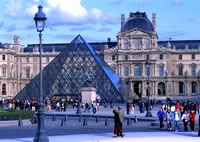
French language qualification exams certified by the French Ministry of National Education, administered by the central office in Sèvres in over 130 countries around the world. DELF (Diploma in French) has four levels: A1, A2, B1, and B2, while DALF (Diploma in Advanced French) has two levels: C1 and C2. Both are based on the standards of the Council of Europe [Common European Framework of Reference].
A French language proficiency test administered by the French Ministry of Education. All Examinee receive a certificate in one of six levels (A1 to C2) established by the Council of Europe (the Common European Framework of Reference). There are no failing grades in the TCF.
Since the exam formats are different, it is not possible to make a general comparison, but roughly speaking, DELF A2 corresponds to the French Language Proficiency Test Level Pre-2, and DELF B1 corresponds to the French Language Proficiency Test Level 2.
■Musashi University Foreign Language Learning Award and EncouragementThere are also some certification exams for which this applies.