
 3S
3S


Science Laboratory Course (Physics)
The aim of this program is to make physics more familiar to students and to discover the fascinating world of physics by operating laboratory equipment and actually measuring physical quantities around them. Observations are conducted not only in laboratories, but also on campus and outdoors, allowing students to discover a variety of phenomena.
In recent years, it seems that an increasing number of students are not studying physics in high school, so the idea of picking up a tester, spectrometer, optical fiber, or transistor, or operating a telescope or digital camera may seem a little scary, but I think they would still like to try it at least once.
We would like to provide such opportunities especially for students in the humanities. We, the faculty, also hope that students will go a step further and develop the habit of turning their attention to the various physical phenomena they encounter in their daily lives and asking themselves, "Why?"
We would like to provide such opportunities especially for students in the humanities. We, the faculty, also hope that students will go a step further and develop the habit of turning their attention to the various physical phenomena they encounter in their daily lives and asking themselves, "Why?"
Experimental Example
1. Friction Experiment
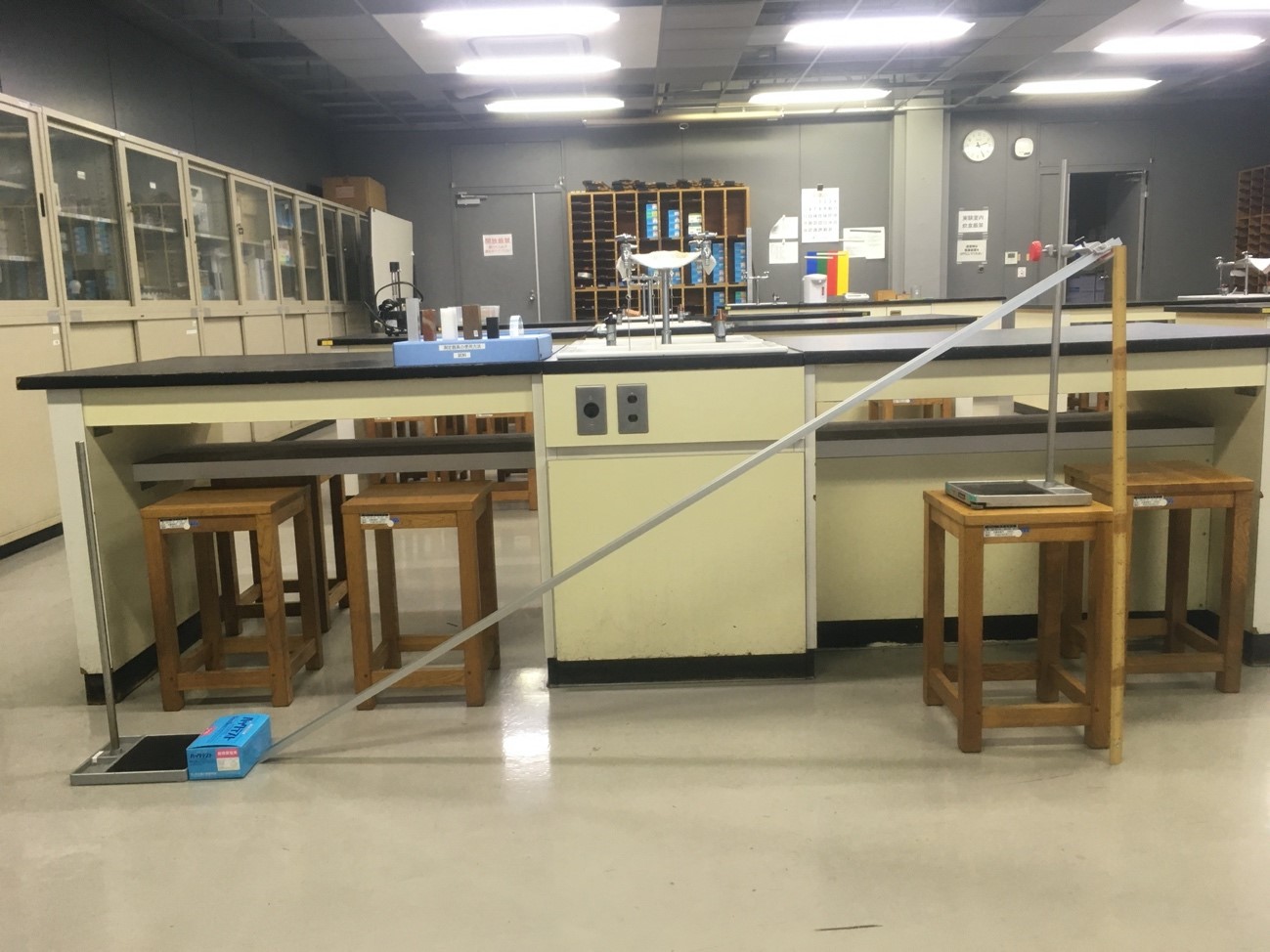
Although people are not aware of it in their daily lives, they are subject to the effect of friction. We can walk on roads and stairs without slipping, and even our socks stay in place as our trousers get caught around our stomachs. Desks don't move, and chairs don't slip off when you sit on them. Human life would be impossible without countless types of friction. The photo shows an experiment to determine the coefficient of kinetic friction by measuring the time it takes an object to slide along a rail.
2. Observation of the spectrum of the light source
When light is decomposed, it is split into various colors like a rainbow. These bands of light are called the "spectrum of light." A simple spectrometer with a diffraction grating is used to observe the spectra of various light sources. The photo shows an experiment observing a hydrogen light source. Two emission lines can be observed.
-
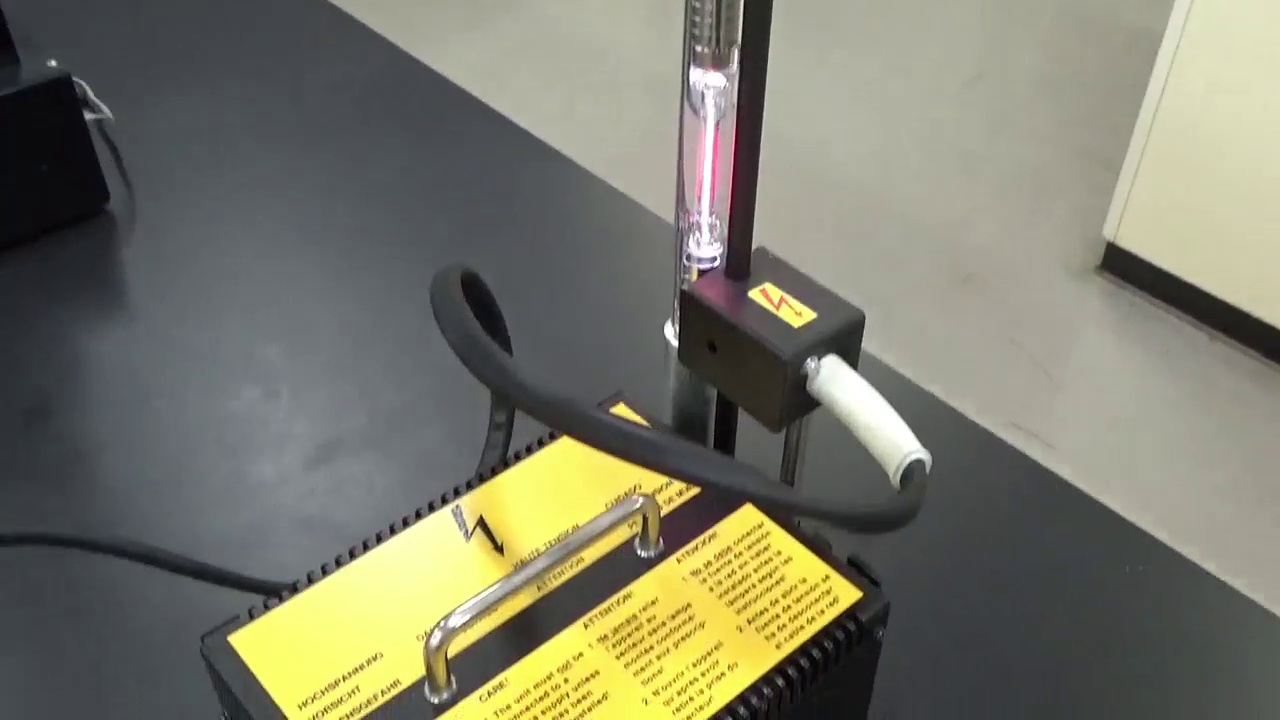
Hydrogen Light Source -
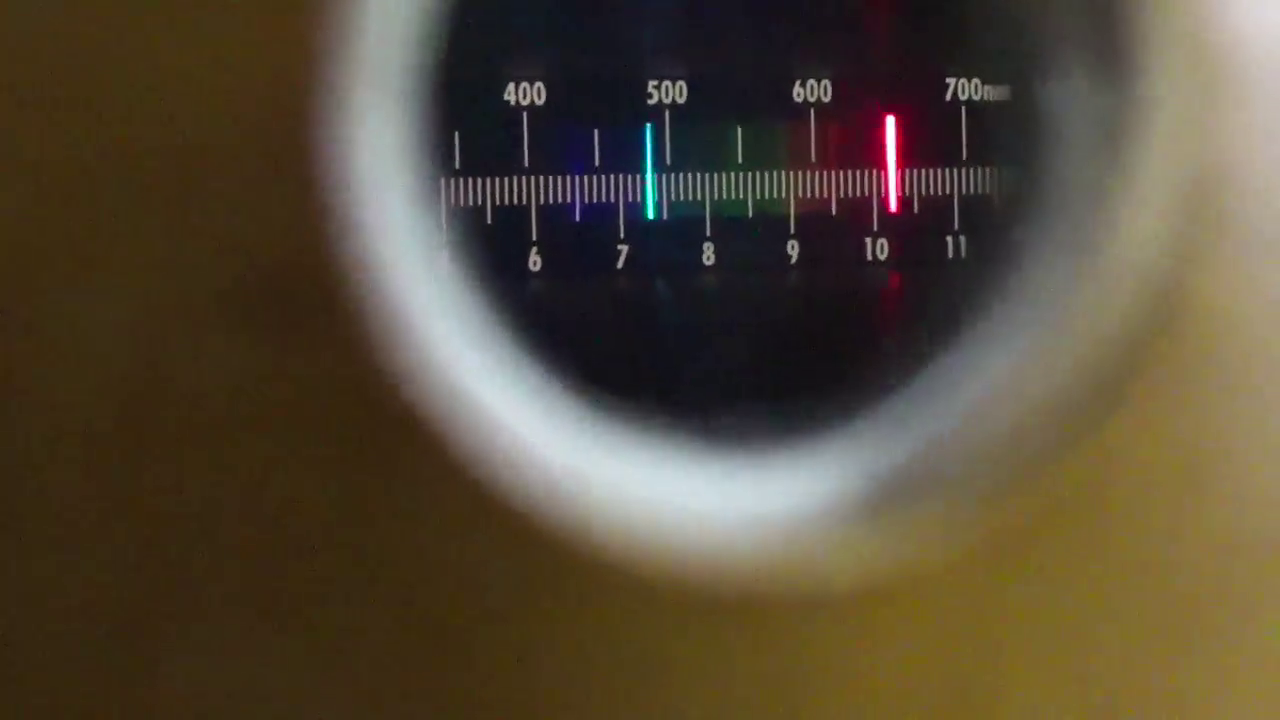
Hydrogen line spectrum
Don't be scared, because the experiments are relatively simple. You don't need to have taken any other physics courses. You don't need any knowledge or experience with laboratory equipment or devices. However, you do need to have a lot of curiosity and motivation, and don't give up.
Experiments are often conducted in groups of 2 to 4 people, with each group dividing up roles and working together, so you may even make lots of friends. Students, let's do our best together!
The Science Lab course (Physics) is taught by two professors from Musashi University, and two staff members from the Natural Sciences Department also help with various experiments.
Experiments are often conducted in groups of 2 to 4 people, with each group dividing up roles and working together, so you may even make lots of friends. Students, let's do our best together!
The Science Lab course (Physics) is taught by two professors from Musashi University, and two staff members from the Natural Sciences Department also help with various experiments.