
 3S
3S


Science Laboratory Course (Chemistry)
- "Words, Movements, and Things" - The Fascination of Chemistry
- "Modern Society and Chemistry" — How Analysis and Synthesis Change Life and Society
- Chemistry through Experiments - "Science Lab Course (Chemistry) A & B"
- Combination of "Analysis, Synthesis, and Modern Life"
"Words, Movements, and Things" - The Fascination of Chemistry
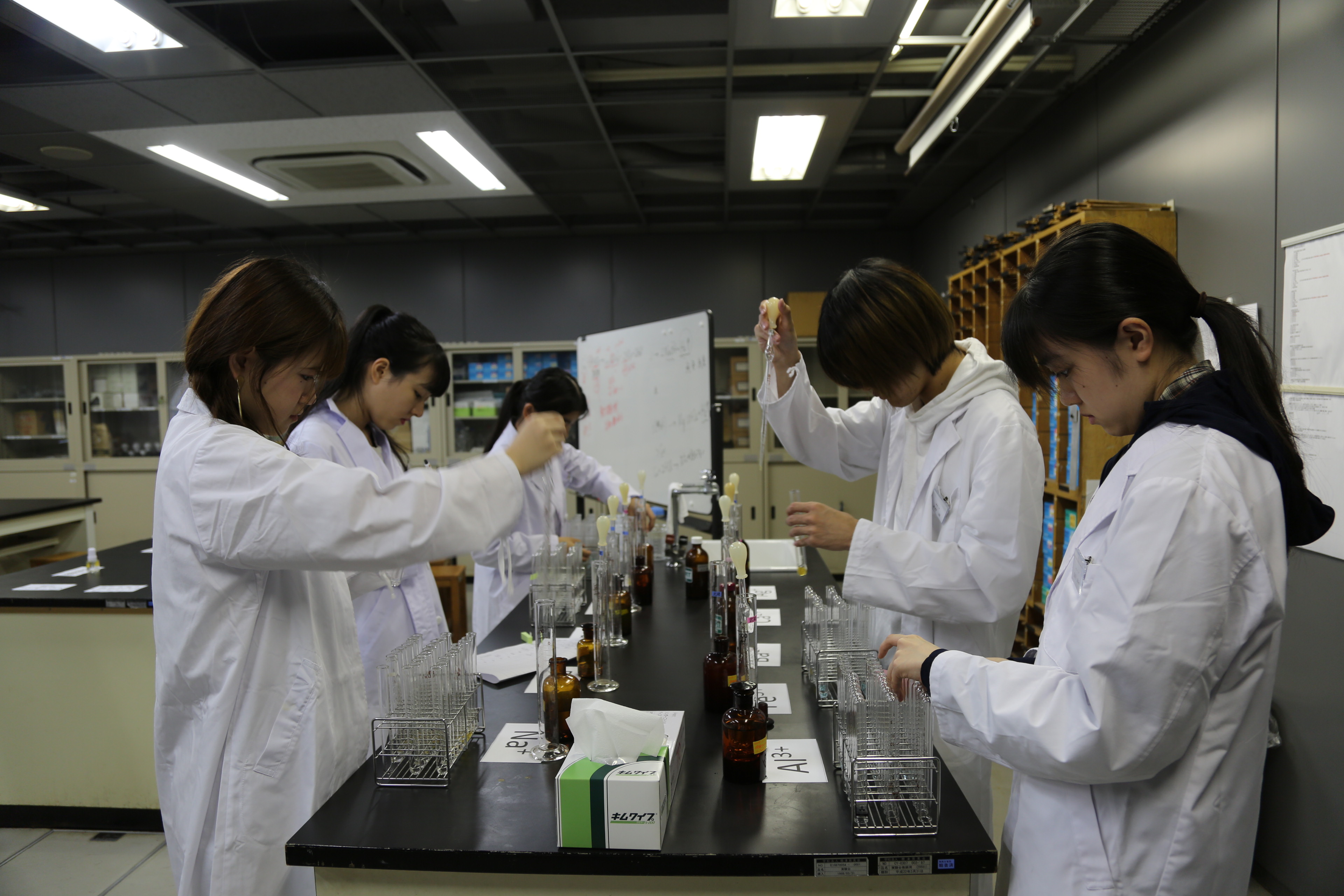
Human intellectual activity is expressed through "words," "movements," and "things." Among these, chemistry is an academic field that is deeply connected to "things." How to use "things" to express one's will is the core of human activities, which is connected to the beginning of civilization. In modern times, we have succeeded in systematizing the various knowledge that humans have experienced about "things." This is chemistry. This academic field not only "analyzes" and uncovers the essence of the existence of "things" as a natural understanding, but also includes the important applied field of "synthesis," which creates new substances unknown to humanity. I think the appeal of chemistry lies in the fact that it develops intellectual challenges through both "analysis" and "synthesis," targeting all "things" that exist or may exist in this world.
"Modern Society and Chemistry" — How Analysis and Synthesis Change Life and Society
In modern times, "synthesized" substances are commonly used in everyday items and electrical appliances that we use in our daily lives. "Synthesis" is not just something that exists within the academic discipline of chemistry; it is a technology that supports modern life itself. And the knowledge system about substances based on "analysis" supports "synthetic" technology. Chemistry is not only a fundamental academic discipline for understanding nature, but it is also a fundamental technology for creating "things" that fulfill human will.
Chemistry through Experiments - "Science Lab Course (Chemistry) A & B"
The distinctive feature of chemistry is that humans can intentionally create the world of "things." Experiments that allow you to actually cause changes in "things" and experience transforming them into something different should be an interesting experience that also helps you think about the connection between modern civilization and "things."
Science Lab Courses (Chemistry) A and B are made up of various experiment types based on the perspectives of "analysis," "synthesis," and "chemistry in daily life." A typical example of "analysis" is "reaction of inorganic ions" in Science Lab Course (Chemistry) A. Students observe the chemical reactions that occur when various substances are mixed together over several sessions, and estimate the components contained in the unknown sample based on the results. On the other hand, a typical example of "synthesis" would be "synthesis of dyes" in Science Lab Course (Chemistry) B. Through the synthesis of historically famous dyes, it may be a good idea to think about the impact on society of synthesizing diverse materials that are not found in natural dyes.
Science Lab Courses (Chemistry) A and B are made up of various experiment types based on the perspectives of "analysis," "synthesis," and "chemistry in daily life." A typical example of "analysis" is "reaction of inorganic ions" in Science Lab Course (Chemistry) A. Students observe the chemical reactions that occur when various substances are mixed together over several sessions, and estimate the components contained in the unknown sample based on the results. On the other hand, a typical example of "synthesis" would be "synthesis of dyes" in Science Lab Course (Chemistry) B. Through the synthesis of historically famous dyes, it may be a good idea to think about the impact on society of synthesizing diverse materials that are not found in natural dyes.
Combination of "Analysis, Synthesis, and Modern Life"
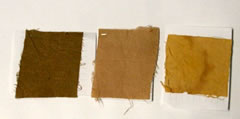
There are also events that allow you to experience "chemistry in everyday life." These include "environmental radiation measurement," "salt measurement in food," "plant dyeing" (photo on the right), and "glasswork." You will be able to experience how "analysis" and "synthesis" techniques are used as applications of chemistry in various aspects of modern life.
The world of the 21st century will be greatly influenced by the development of science and technology. We are entering an era where a thinking system that separates the humanities and sciences will no longer be able to keep up, and we are now in a state where "the humanities are science" and "the sciences are culture."
The world of the 21st century will be greatly influenced by the development of science and technology. We are entering an era where a thinking system that separates the humanities and sciences will no longer be able to keep up, and we are now in a state where "the humanities are science" and "the sciences are culture."