
 3S
3S


About AEDs
AED stands for Automated External Defibillation.
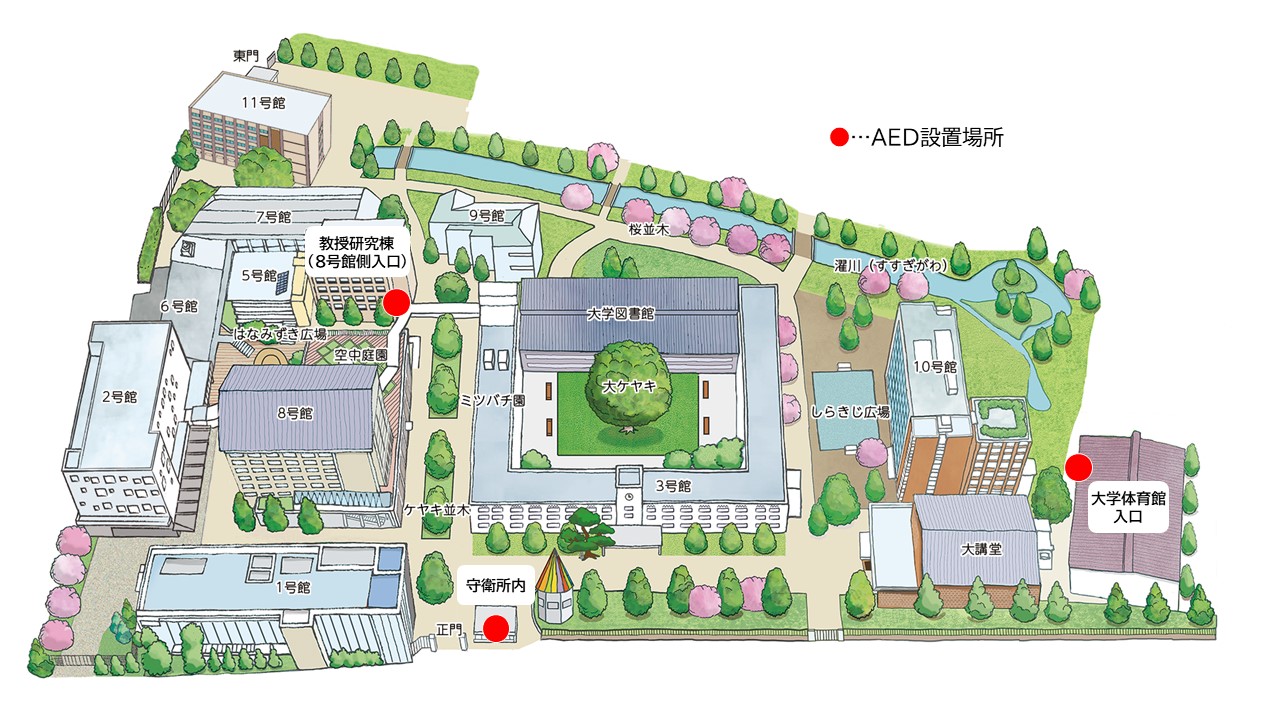
Currently, there are three AEDs installed on the Ekoda campus and three on the Asaka campus.
Ekoda Campus AED Locations
- Professor's Research Building (Entrance from Building 8)
- Inside the guardhouse
- University gym entrance
- Inside the guardhouse
- University gym entrance
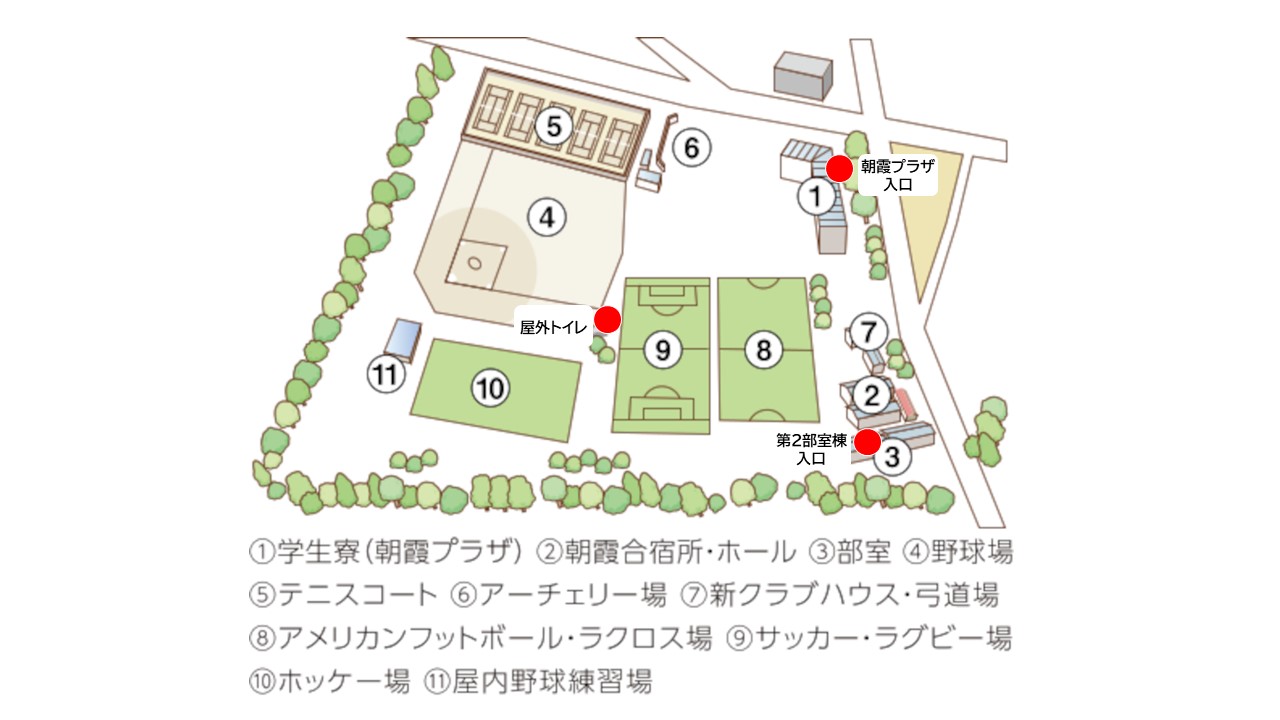
Asaka Ground AED Location
- Asaka Plaza entrance
- 2nd club room building entrance
- Outdoor toilets
- 2nd club room building entrance
- Outdoor toilets
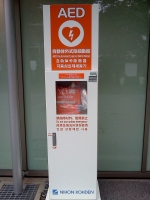
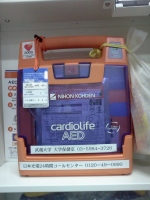
The photo on the top left is an image of an AED stand-type storage case. When you open the front door, you will find the AED itself inside. The case also contains bath towels, gauze, disposable gloves, scissors, artificial respiration sheets, hair removal razors, and other useful emergency supplies.
*The AED unit at the guardhouse is installed inside the building, not on a stand.
It is estimated that approximately 60,000 to 80,000 people in Japan die outside of hospitals each year due to sudden cardiac arrest caused by ventricular fibrillation, a condition in which the heart goes into spasm. Sudden cardiac death can occur not only in people with pre-existing heart disease, but also in people who are normally healthy and have no heart problems. In other words, it can happen at any time, whether at school, at home, at work, or while exercising.
The only way to prevent sudden cardiac death is to use a defibrillator to deliver an electric shock to the heart within a few minutes of the attack.
Defibrillation procedures must be performed as quickly as possible.The national average ambulance arrival time is said to be about 10 minutes. For every minute that defibrillation is delayed after cardiac arrest, the life-saving rate drops by 7-10%. Therefore, waiting for an ambulance to arrive will not save a life that could otherwise be saved.
Since July 2004, AEDs have been available for anyone to use in Japan. As a result, they are now installed in many public facilities, including airports, train stations, government offices, and schools. There have been many reported cases of lives saved by the use of an AED. In response to this, Musashi University installed an AED next to the guardhouse on March 1, 2006.
If you find someone who is unconscious, not breathing or coughing, and not moving, and if they are at least 8 years old, immediately call 119. Tell those around you to prepare an AED at the guardhouse etc.
When you open the cover of an AED, the device will automatically provide voice instructions on how to use it. The device will also determine if defibrillation is necessary. Additionally, if an accident occurs as a result of the use of an AED in good faith to save a life, the person who used it will not be held responsible.
Also, when combined with proper CPR techniques (Fire and Disaster Management Agency First Aid Web Course [for the general public] website), it can increase the life-saving rate even more. Be sure to learn proper CPR techniques. Your actions will save precious lives.
Links for AEDs
- Tokyo Disaster Prevention and Emergency Medical Service Association
- First aid, how to use an AED, CPR training schedule, etc.
- Nihon Kohden Corporation
- About AED product information
- AED Promotion Association
- The latest information on AEDs, AED installation information, etc.