
 3S
3S


Message from Seniors
Messages from Alumni
Learning from the museum internship is an invaluable asset
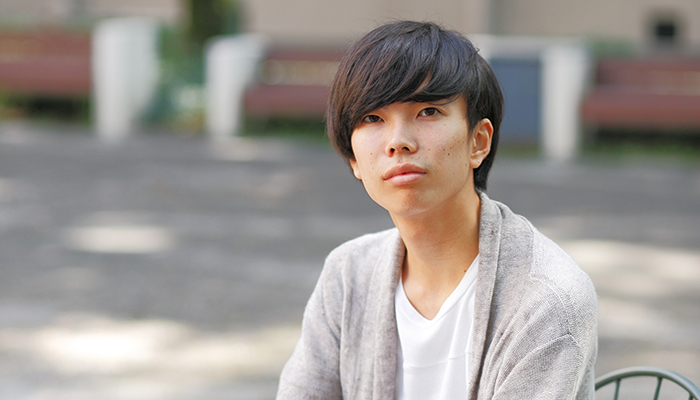
Graduated from the Faculty Faculty of Humanities Department of Japanese and East-Asian Studies in March 2016
Graduated from Saitama Prefectural Koshigaya High School
The curriculum for the third-year "Practicum 1 and 2" classes is one of the attractions of Curator Training Course. For example, in the study trip to Kobe that I was in charge of, the students themselves selected and negotiated with the museums to visit, arranged transportation and accommodation, and concretely implemented their learning plan. The students proceeded with their activities through repeated discussions among themselves, but when they got stuck, they received friendly guidance from the teachers. I think that learning the importance of preserving and passing on culture and the arts while acquiring basic social skills was an invaluable asset.
I learned the mindset and attitude of passing on valuable materials with passion
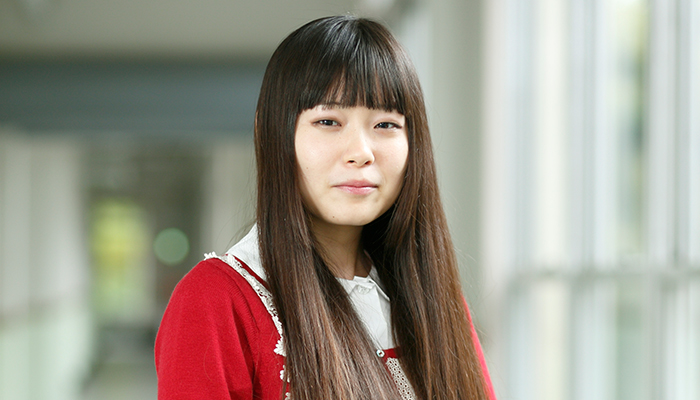
Graduated from the Faculty of Humanities Department of European Studies in March 2015
Graduated from Toyooka High School Saitama Prefecture
During the museum training in the third year, students have the fun of discussing and creating their own study themes while receiving direct guidance from curators. With each training, students have learned the importance of having the heart and attitude to protect and pass on valuable materials with passion. In addition, at the open campus, students were in charge of exhibits, and held a panel display on how to take courses and a mini exhibition of Nerima Ward's collections. They tried to explain things while taking into account the feelings of visitors. Supported by teachers and staff in Curator Training Course, Alumni curators, and a network with Nerima Ward, students were able to work together with other students to achieve their goals, which gave them confidence.
Messages from Senior Curators
I gained a lot from the student-led practical training.
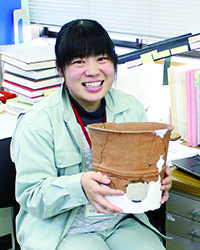
Curator, Cultural Property Protection Section, Social Education Division, Fujimino City Board of Education, Saitama Prefecture
Graduated from the Faculty of Humanities, Department of Japanese Culture (currently Department of Japanese and East-Asian Studies) in 2006
I've always loved history, so I chose Musashi University where I could study Japanese history and obtain a curator's qualification. All of the practical training in my third year was planned by the students themselves, and they made appointments with museums and other institutions to carry it out. I remember it being very difficult, taking months of preparation beforehand. But I think that's why I learned so much. I'm currently in charge of buried cultural properties, and my main job is to conduct excavation surveys and write reports on the results of those surveys. I want as many people as possible to become interested in the city's history and cultural properties, and to pass them on to future generations.
Practical learning and activities connect to the present
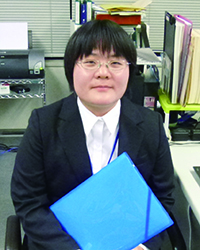
Curator, Kawasaki City Museum (Folklore)
Graduated from the Faculty of Humanities, Department of Japanese and East Asian Comparative Culture (currently Department of Japanese and East-Asian Studies) in 2012.
In the third year's "Practicum 1 and 2," students spoke to exhibitors who actually run museum exhibits and curators from museums and art galleries around the country about their work, learning practical skills such as how to handle materials and how to make exhibition stands. In the fourth year's exhibition training, students chose a theme, created an exhibition together with all the students, and also held a gallery talk. I think that through these activities, they were able to acquire the knowledge of a curator. In the future, I would like to work in a position where children can pass on the local culture and history to the future through exhibitions.
The sense of tension when handling the works and the way of thinking about creating catalogs are still useful today.
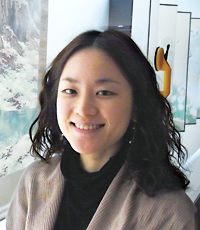
Curator, Yamatane Museum of Art
Graduated from theFaculty of Humanities, Department of Comparative Culture (currently Department of Japanese and East-Asian Studies) in March 2006.
I chose to Curator Training Course because I love art appreciation, but when I learned about the wide range of work involved, such as handling artworks and taking photographs, my desire to work as a curator increased.
In my current work, I still faithfully adhere to what I learned in classes and training, such as the importance of being vigilant and facing artworks properly when handling them, and the way of thinking when creating pamphlets and catalogs. I find my job as a curator, which involves communicating the historical importance of artworks and how to appreciate them to understand their appeal, very rewarding.
The skills I gained through Curator Training Course are my greatest asset today.
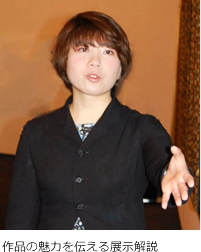
Curator, Ikeda Museum of 20th Century Art
Graduated from the Faculty of Humanities, Department of Japanese and East Asian Comparative Culture (currently Department of Japanese and East-Asian Studies) in March 2009
Graduated from Tokyo Kasei Gakuin High School Tokyo
I developed my initiative and communication skills in Curator Training Course. The museum where I currently work is where I did my curatorial training. I think it all started when I offered to help rearrange the exhibits after my training. The communication skills I developed are also being put to good use now that I'm a curator and I provide exhibition commentary that values dialogue with visitors. Students plan, research, and create their own learning curriculum for the museum training course. Musashi University's Curator Training Course respects the autonomy of its students, so I'm sure it will help you grow a lot.
Free and creative lessons are the biggest attraction of Curator Training Course
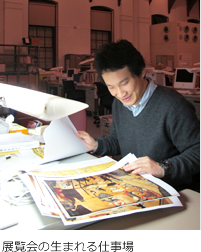
Curator, The Museum of Kyoto, Kyoto Prefecture
Graduated from the Faculty of Humanities, Department of Japanese Studies (currently Department of Japanese and East-Asian Studies) in March 2003.
Graduated from Saitama Prefectural Warabi High School
It is not enough for a curator to merely deepen their specialized research; the job requires, above all else, cooperation and collaboration with a variety of people. During the "exhibition practice" class in the course, my friends and I had many discussions and helped each other through the difficulties we faced. This experience has become the formative landscape of my work. In Curator Training Course, classes are created through collaboration across the boundaries of faculties and fields. These free and creative classes are the great attraction of Musashi University Curator Training Course.
Taking on new challenges will give you the power to open up a new world.
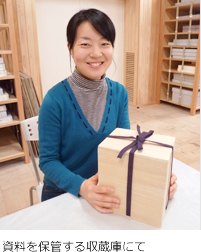
Curator, Tochigi Prefectural Museum of Art
Graduated from the Faculty of Humanities, Department of Japanese Culture (currently Department of Japanese and East-Asian Studies) in March 2004.
Graduated from Utsunomiya Central High School Tochigi Prefecture
The courage and initiative I acquired in the Curator Training Course have been extremely useful when visiting artists and their workshops. In addition, cooperation with technical experts is essential when planning and running an exhibition. Through my activities in Curator Training Course, I have developed the communication skills necessary to work together to achieve our goals. Just as a museum is a place where visitors can broaden their horizons and encounter people and artworks, Curator Training Course will surely be a gateway to a new world for you.