
 3S
3S


Characteristics and curriculum of Curator Training Course
In Curator Training Course, in addition to earning the credits necessary for graduation, students aim to acquire a curatorial qualification by learning the basic skills and Specialized Knowledge of museology required for the work of a curator. In addition, through group work that involves planning, implementing, and writing reports, students will develop the flexibility and ability to apply ideas in an actual museum work environment.
Features
Student-led, practical learning
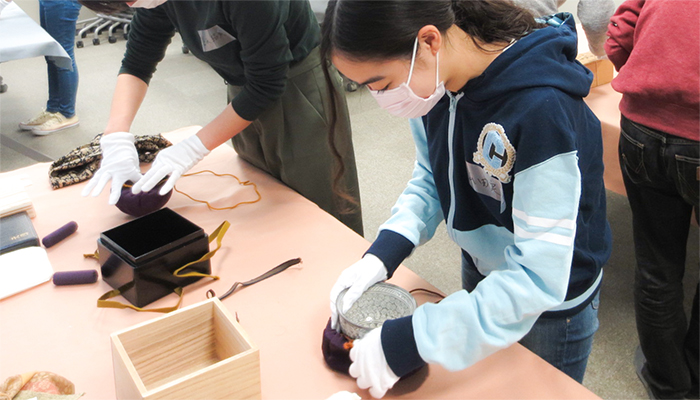
Based on a study theme decided by the students, they visit a museum to learn about its operations and acquire the knowledge and basic skills necessary for the work of a curator through practical experience, such as basic skills such as handling art pieces and photography, and producing publications.
"Exhibition Practice" planned on campus
We offer a high-quality educational program with hands-on activities, such as open-campus themed exhibitions and art-handling demonstrations, which provide an opportunity for students to test their new ideas.
The culmination of four years of work: "Course Completion Exhibition"
The work of a curator requires collaboration and cooperation with many different people. At the course completion exhibition, students will be able to put what they have learned into practice and develop the communication skills necessary to work together to achieve their goals.
Four years as Curator Training Course student
In the first and second years, students mainly learn Specialized Knowledge of museum studies. After registering for the course in the fall of the second year and becoming a student, students complete a two-year "museum internship" in their third and fourth years to acquire the knowledge and basic skills necessary for the work of a museum curator.
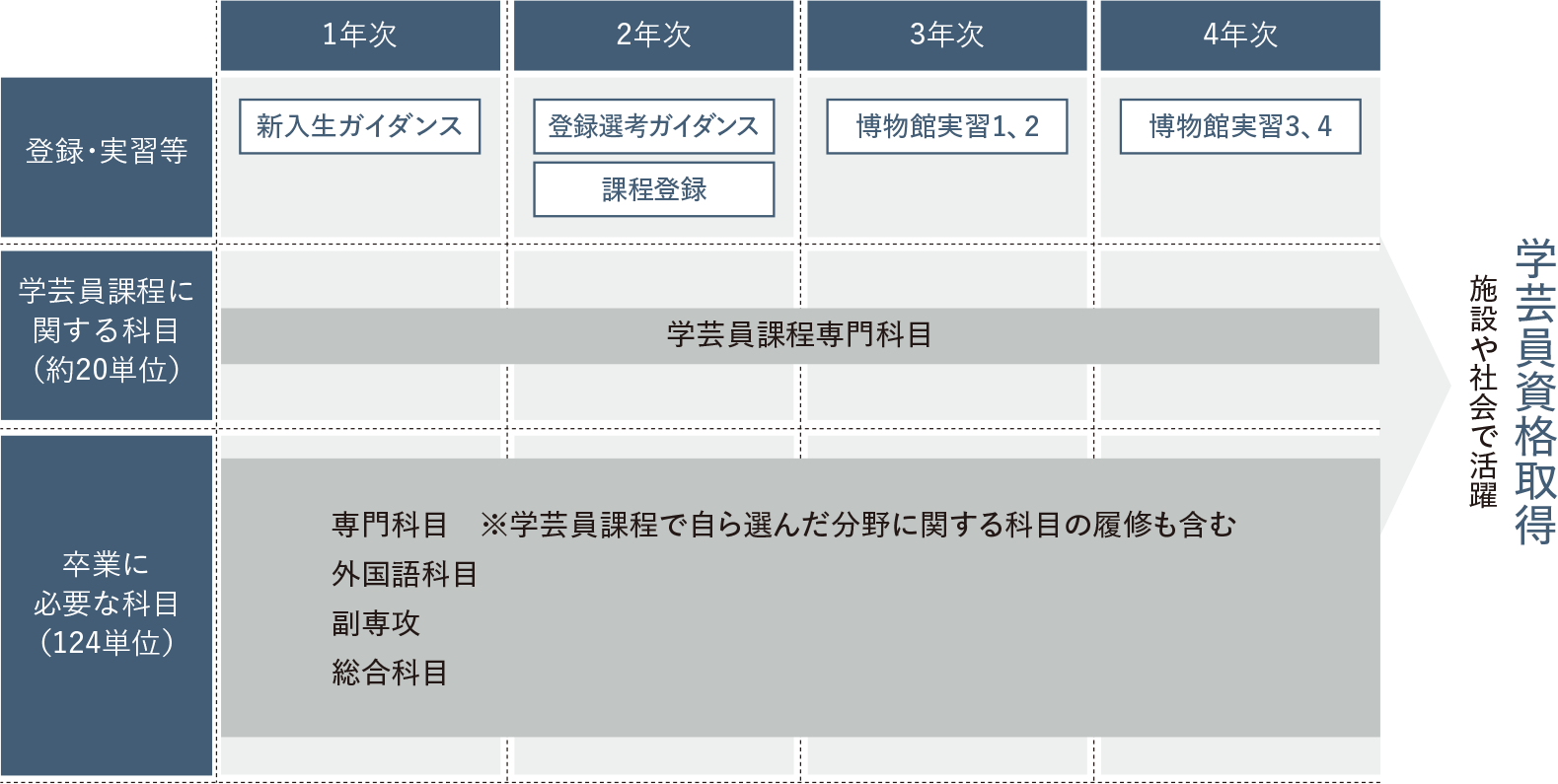
[Third year] Practicum 1, 2
- Field trips: Visit museums in the Tokyo area and receive lectures from curators
- Summer study trip: Visiting local museums and receiving lectures from curators
- Practical training: Acquire the basic skills necessary for the work of a curator
- Publication of course reports: Creating and compiling a record of course activities for the year
[4th year] Practicum 3, 4
- Museum training: Experience the practical work of a curator at a museum
- Exhibition training: After creating an exhibition plan and making a presentation, you will hold an exhibition at the end of the course.