3S
3S


NEWS & EVENTS

2026.05.20
- Education and Research
- Faculty of Humanities
- Public Liaison Department
notice
Professor Department of British and American Studies Takamitsu Jimura Co-authored 'Tourism, Sustainable Development, and Cultural Heritage'
For open access, anyone can download the co-authored PDF version of the book for free from the "Free Download (PDF)" link below.
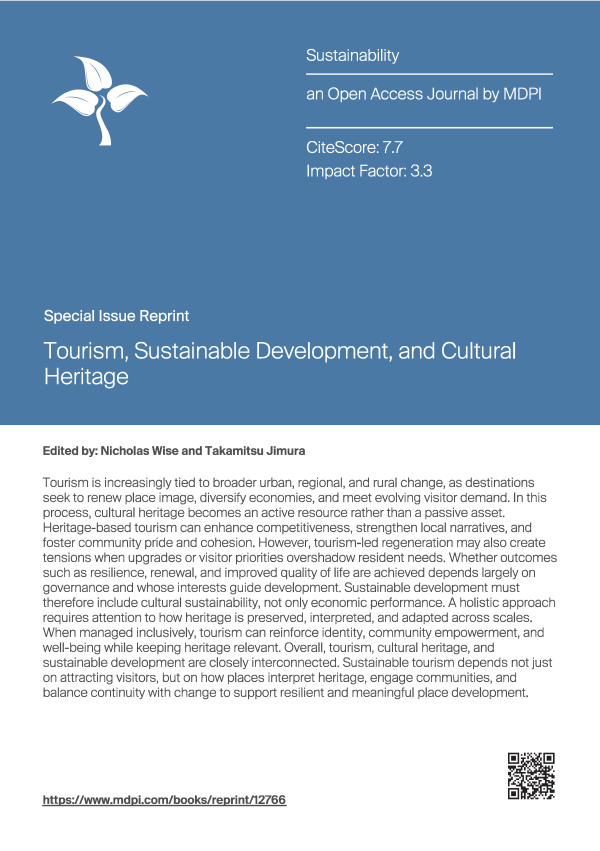
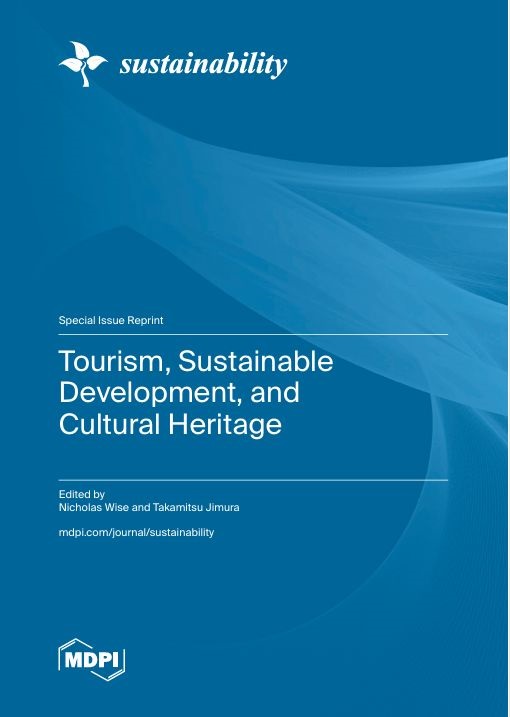
- 『Tourism, Sustainable Development, and Cultural Heritage』
- Department of British and American Studies Takamitsu Jimura Professor
- School of Community Resources and Development, Arizona State University, Dr. Nicholas Wise
Overview of This Book
A word from the author (guest editor)
As Guest Editors, we are delighted to present this Special Issue reprint, which brings together cutting-edge academic contributions on the intersection of tourism, sustainable development, and cultural heritage. In an era marked by rapid globalization, environmental shifts, and evolving tourist behaviors, managing the delicate balance between promoting tourism and preserving the intrinsic values of heritage has never been more critical.
The articles in this collection represent diverse geographical contexts—spanning East Asia, Europe, and Central Asia—and employ innovative methodologies ranging from qualitative fieldwork to advanced geospatial (GIS) and quantitative analysis. By analyzing the spatiotemporal distribution of heritage, evaluating culturalization strategies, and examining the socioeconomic impacts on host communities, these studies illuminate how heritage can serve as a catalyst for sustainable local development.
Furthermore, this volume highlights the importance of visitor experiences, showing how deep engagement with cultural heritage can foster a stronger sense of cultural identity and promote responsible travel practices. We believe that sustainable tourism can only be fully realized when community well-being, heritage preservation, and economic viability are integrated holistically.
We hope this book provides valuable theoretical frameworks, empirical findings, and practical insights for researchers, policy-makers, heritage managers, and students worldwide who are dedicated to this field. We would like to express our sincere gratitude to all the authors, reviewers, and the MDPI editorial team whose hard work and expertise made this publication possible. Together, let us continue to advance knowledge that supports a more inclusive, balanced, and sustainable future for cultural heritage tourism and community development across the globe.
As a guest editor, I am very pleased to present a reprint of this special issue, which brings together cutting-edge research at the intersection of tourism, sustainable development, and distributed cultural heritage. In today's world, where globalization is rapid, environmental changes are advancing, and tourist behavior is diversifying, maintaining a delicate balance between tourism promotion and preserving the true value of heritage has become more important than ever.
The papers included in this book cover diverse regions such as East Asia, Europe, and Central Asia, employing innovative methods ranging from qualitative fieldwork to advanced spatiotemporal analysis using geographic information systems (GIS). By clarifying the spatiotemporal distribution of heritage, evaluating culturalization strategies, and examining its socioeconomic impact on local communities, it demonstrates how heritage can serve as a catalyst for sustainable regional development.
Furthermore, a deep engagement with cultural heritage is emphasized as enhancing people's cultural identity and encouraging responsible travel practices. We believe that sustainable tourism will only be truly realized when community well-being, heritage preservation, and economic viability are comprehensively integrated. We hope this book will provide meaningful insights to researchers and practitioners worldwide and serve as a step toward a more harmonious future.