
NEWS

2026.02.19
- Study Group
- Research Organization
event
March 21 (Sat) Musashi University International Symposium "Long-term Stagnation in East Asia" will be held online. Musashi University JPE Symposium: Secular Stagnation in East Asia
Overview
- Date and time: Saturday, March 21, 2026, 15:00~18:00
- Date: 15:00 to 18:00 Saturday, 21 March 2026, in Tokyo
- Online Zoom
- Application deadline: March 10 (Tue)
- Registration Deadline: 10 March 2026
While East Asia is expected to be the growth engine of the global economy in the 21st century, two different concerns are growing for East Asia's economic growth.
First, it is becoming increasingly clear that East Asian economies are facing headwinds. With the accelerating demographic age, especially in East Asia, there are widespread concerns that these economies will also face prolonged stagnation. The possibility of Japan's "lost decades" spreading throughout East Asia needs to be examined in terms of the contradiction between the startup craze and innovation activity on the one hand, the slowdown in productivity growth, the widening of inequality, and the progression of deflation on the other. Second, economic growth in East Asia threatens U.S. hegemony and increases geopolitical tensions. As Alvin Hansen first used in 1938, it could cause retaliatory actions in the form of "military Keynesianism" and divide the world economy.
This international symposium will consider the following points:
(1) Patterns of long-term stagnation caused by demographics in East Asia.
(2) The impact of rapid technological changes due to digitalization on Japan and East Asia.
(3) The impact of the expansion of financial industry dominance and globalization on Japan and East Asia.
(4) Concerns that the military Keynesianism of the United States and China will develop into a division of the world economy.
Expectations have been high that East Asia would serve as the global economy's growth engine in the twenty-first century. At the same time, it has become increasingly clear that these economies face headwinds, not least in north-east Asia, from accelerated demographic ageing, leading to fears that these economies, too, face the prospect of secular stagnation, and that Japan's 'lost decades' could spread much further afield. While such a possibility tends to get drowned out by the clamour of geopolitical tensions in East Asia, the contradictions between febrile startup and innovation activity on the one hand and slowing productivity growth, growing inequality, and, indeed, deflation on the other are worth exploring. Conversely, as when Alvin Hansen first used the term in 1938, there is a possibility of a coming countermovement, in the form of 'military Keynesianism.'
This symposium is organised with contributions to the Japanese Political Economy.
https://www.tandfonline.com/toc/mjes20/current
49-1 (Spring 2023) Secular stagnation as a new great depression
49-4 (Fall 2023) Is secular stagnation in Japan and the world the beginning of a new great depression?
50-2 (Summer 2024) The rise and fall of the export-led industrialisation model in the changing global economy
51-4 (Fall 2025) Secular Stagnation and the End of Capitalism
52-1 (Spring 2026 Forthcoming) Secular Stagnation in East Asia
Moderators
-
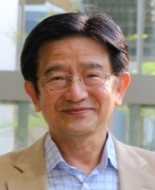
Nobuharu Yokokawa, Musashi University, Japan -

Radhika Desai, University of Manitoba
Speakers and Discussants
-
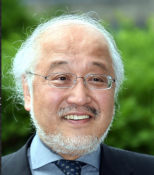
Takahiro Fujimoto, Waseda University -
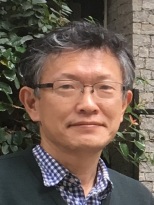
Tomoo Marukawa, The University of Tokyo -

Brieuc Monfort, Sophia University
-
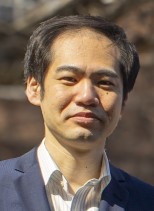
Sousuke Morimoto, Rikkyo University -

Kang-Kook Lee, Ritsumeikan University
Programme (Japan Time)
| 15:00-15:10 |
Opening Remarks
Nobuharu Yokokawa and Radhika Desai |
|---|---|
| 15:10-16:30 |
Report Presentations
1. Takahiro Fujimoto, Growth, Stagnation, and Resilience: The Japanese Manufacturing Industry in the Post-Cold-War Period
2. Brieuc Monfort. Secular Stagnation in East Asia: Structural, Cyclical, or Political? 3. Tomoo Marukawa, Will China enter a secular stagnation? Implications from Japan's experience in urban housing development. |
| 16:40-17:40 |
Panel Discussion Round table
Discussants: Sosuke Morimoto and Kang-Kook Lee
|
| 17:40-18:00 |
Closing Remarks
Radhika Desai and Nobuharu Yokokawa |
Registration [Event]
- Language used
- Language: English
- Participation fee
- free
- Application deadline
- Tuesday, March 10
- Registration Deadline: 10 March 2026
* The registration form will be sent to Nobuharu Yokokawa, professor emeritus at Musashi University.